
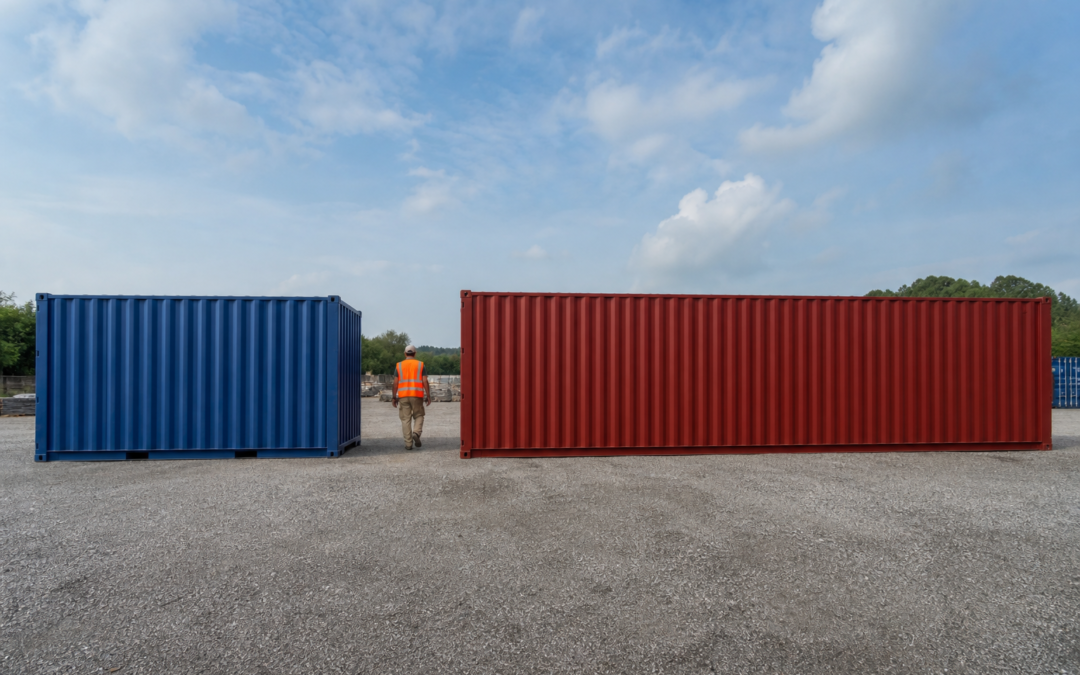
20ft vs 40ft Shipping Containers: Which Size Should You Buy?
After you skim our shipping container buying guide, choosing between a 20ft shipping container and a 40ft shipping container is one of the most common decisions buyers make. The wrong size costs money twice — once at purchase, and again if you outgrow it or cannot place it on site. This comparison breaks down capacity, cost, delivery, and real-world use cases so you can decide with confidence.
At Sea Containers For Sale, we talk to buyers every week who ask the same practical question: “Do I really need the bigger box?” Use this guide and the table of contents below to find your answer.
Table of Contents
- Quick Comparison Table
- Capacity & Interior Space
- Cost Factors Beyond the Sticker Price
- Delivery & Site Access Differences
- Best Use Cases for Each Size
- Where High Cube Changes the Decision
- A Simple Decision Framework
- Common Mistakes When Choosing Container Size
- FAQs
- What to Do Next
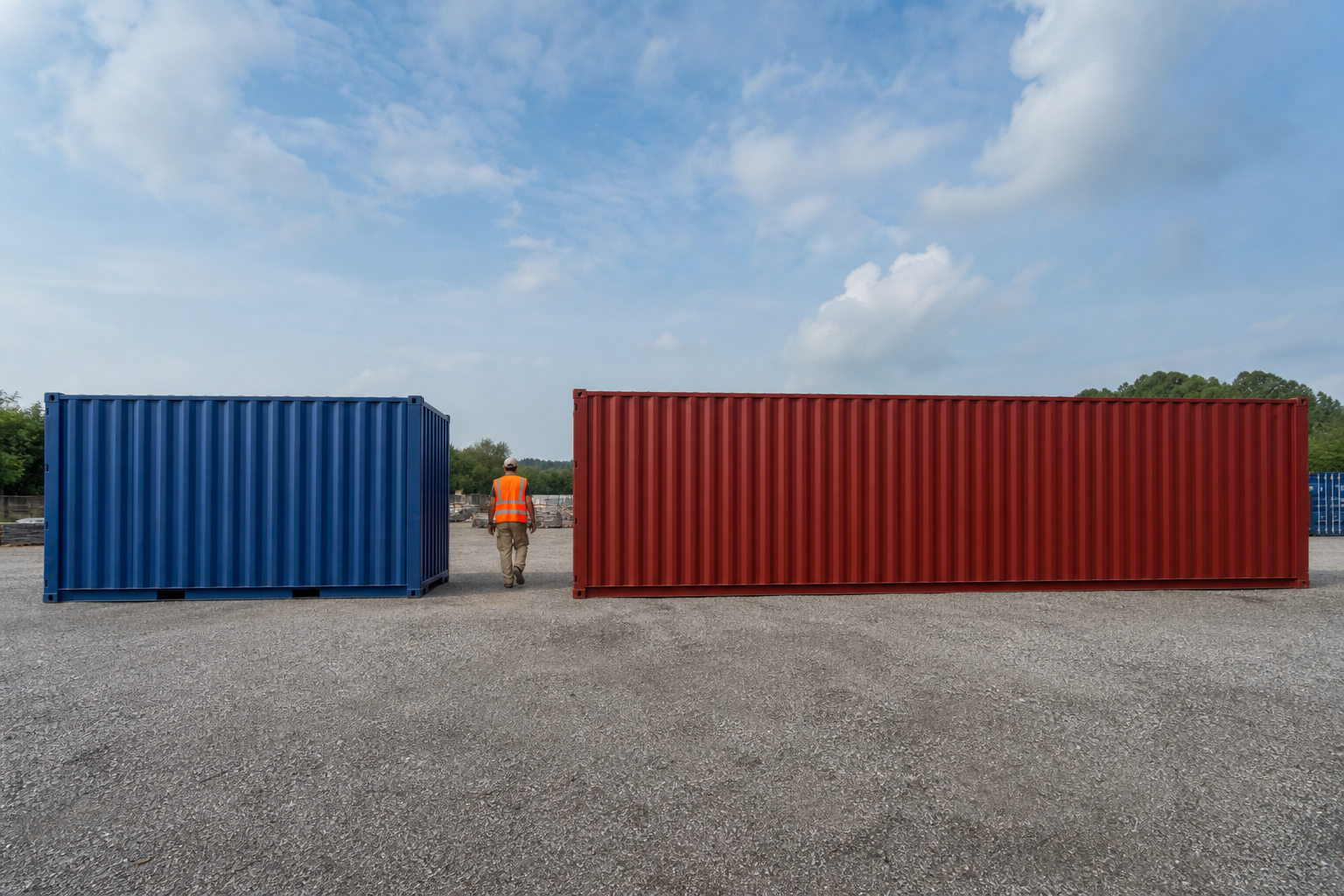
Quick Comparison Table
| Factor | 20ft Container | 40ft Container |
|---|---|---|
| Exterior length | Approx. 20 feet | Approx. 40 feet |
| Typical interior volume | ~1,170 cubic feet | ~2,350 cubic feet |
| Footprint on land | Easier on small lots | Needs longer clear space |
| Purchase price | Usually lower | Higher, but better cost per cubic foot |
| Delivery difficulty | Often easier | Needs more access room |
| Best for | Farms, tools, starter projects | Warehousing, offices, multi-room builds |
Capacity & Interior Space
On paper, a 40ft container is roughly double the length of a 20ft unit. In practice, that extra length changes how you organize the interior.
What Fits in a 20ft Container?
- Lawn equipment, ATVs, and seasonal tools
- Jobsite materials for a small crew
- Inventory overflow for a small retail or eCommerce business
- A compact workshop or one-room office conversion
Real Talk: 20ft Feels Bigger Than a Shed
Many first-time buyers are surprised by how much a 20ft unit holds compared with a backyard shed. If your goal is secure outdoor storage and your lot is tight, 20ft is often the sweet spot.
What Fits in a 40ft Container?
- Palletized inventory and bulk materials
- Larger workshops with workbenches and shelving aisles
- Multi-room offices, classrooms, or pop-up retail layouts
- Container home floor plans with separate living zones
Organization Tip for 40ft Units
Use a center aisle and wall shelving so you do not create a “tunnel of clutter.” The extra length only helps if you can reach what you store.
High Cube Volume Boost
A 40ft high cube adds interior height, which is valuable for racking, standing work, or living spaces. If people will spend hours inside, height often matters more than another few feet of length.
Measure Your Stuff Before You Order
List the largest items you will store — pallets, lumber, machines, furniture. Then compare that list to each container’s door opening and interior length. Oversized items decide the size for you.
Cost Factors Beyond the Sticker Price
Condition grade also changes price — compare new vs used shipping containers before you lock a budget. The container price is only part of the total. Delivery, placement method, modifications, and future flexibility all affect value.
- Unit price: 20ft usually costs less upfront.
- Cost per cubic foot: 40ft often wins on storage efficiency.
- Delivery fee: Longer units can cost more to haul and place.
- Modifications: Windows, doors, and electrical cost more on larger builds, but you gain usable space.
- Future growth: Buying too small may force a second purchase later.
When Paying More for 40ft Is Smarter
- You already know you will fill a 20ft within months
- You need aisle space for pallets or frequent access
- You plan a multi-room conversion
- Your site can accept a 40ft delivery without drama
When 20ft Is the Better Investment
- Your access road or yard cannot handle a longer trailer
- You only need secure tool storage
- You want lower entry cost while testing a container project
- You may move the unit again within a year or two
Delivery & Site Access Differences
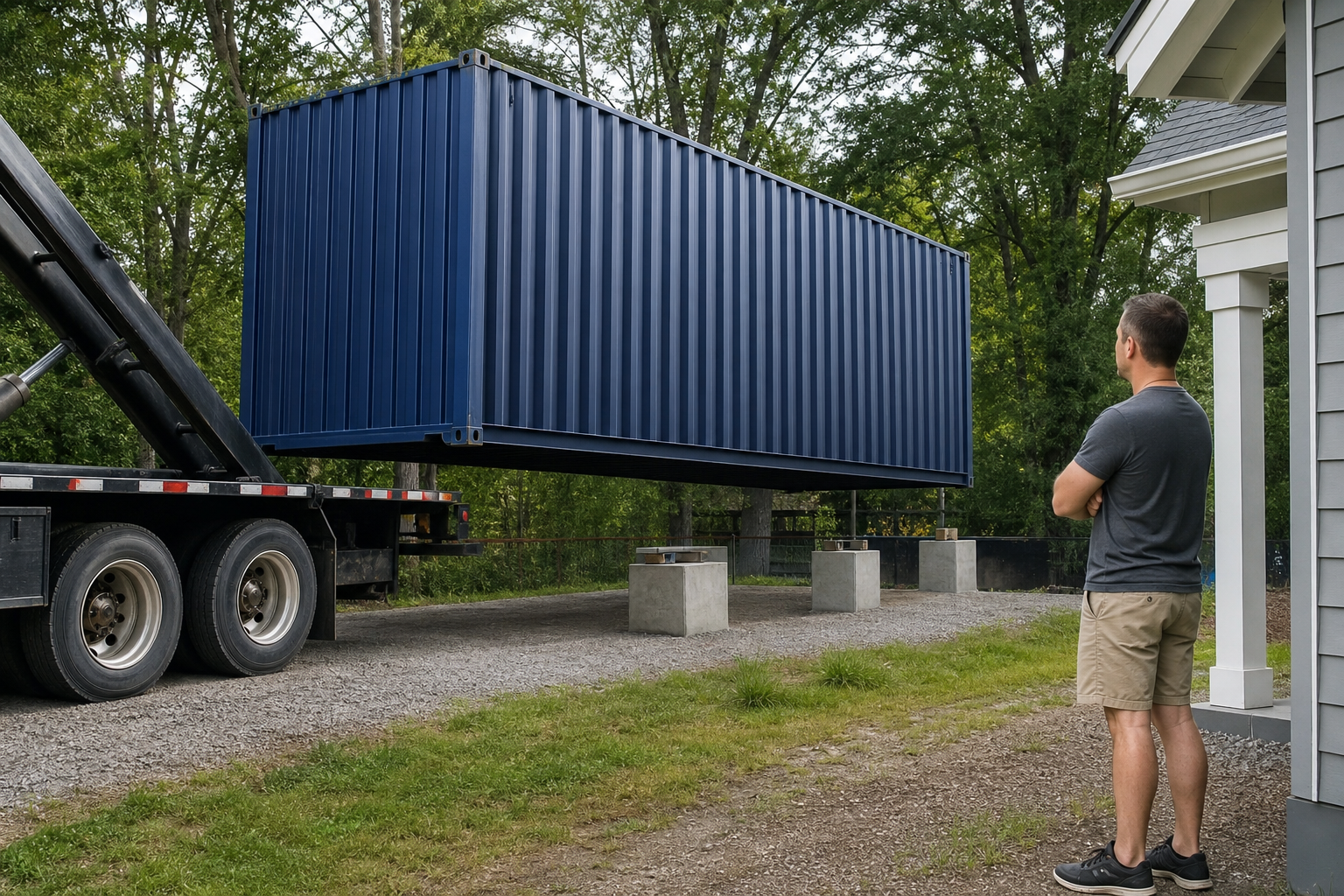
Delivery is where size becomes physical. A 40ft container needs a longer clear path, more swing room, and often a more careful unload plan.
Site Checklist for 20ft Buyers
- Confirm gate width and driveway strength
- Clear overhead branches
- Mark the drop point with room for door swing
Site Checklist for 40ft Buyers
- Measure the full approach path, not just the final pad
- Ask whether a crane, sideloader, or tilt-bed is required
- Check for power lines, fences, and neighbor boundaries
- Plan a level pad at least as long as the container
Human Tip: Walk the Delivery Path
Literally walk from the street to the drop zone with a measuring tape. If a pickup truck barely fits, a 40ft container delivery will be stressful. Better to discover that before you pay.
Best Use Cases for Each Size
Need inspiration beyond size? Explore the best uses for sea containers — storage, offices, workshops, retail, and homes.
| Use Case | Better Size | Why |
|---|---|---|
| Farm equipment lockup | 20ft | Enough space, easier placement |
| Construction site storage | 20ft or 40ft | Depends on crew size and materials |
| E-commerce inventory overflow | 40ft | Pallet aisles and volume |
| Home gym / studio | 20ft high cube | Compact footprint, better headroom |
| Office or classroom | 40ft high cube | Room for desks and walkways |
| Container home starter | 40ft high cube | More livable floor plan options |
Two Containers vs. One Large Container
Sometimes two 20ft units beat one 40ft. You can separate hazardous materials from clean inventory, place units in different yard zones, or stage a phased project. The trade-off is two delivery fees and two footprints to maintain.
When Two 20ft Units Make Sense
- You need storage in two locations on the same property.
- You want one unit for tools and one for finished goods.
- Access is limited and two shorter deliveries are safer.
Where High Cube Changes the Decision
High cube containers are about one foot taller than standard units. That extra height is not marketing fluff — it changes comfort and storage density.
- Better for standing workshops and offices
- Better for lofted sleeping areas in tiny-home builds
- Better for tall shelving and racking systems
Standard vs. High Cube Rule of Thumb
If people work inside daily, choose high cube. If the unit is mostly sealed storage, standard height is usually fine.
A Simple Decision Framework
- List what you will store or build in the next 18 months.
- Measure site access from street to pad.
- Decide if people will work inside regularly.
- Compare total delivered cost, not just unit price.
- Choose the smallest size that still feels comfortable for growth.
Fast Answers
- Most homeowners and farms: start with 20ft.
- Most warehouses and office conversions: choose 40ft or 40ft high cube.
- Unsure but growing fast: lean toward 40ft if your site allows it.
Common Mistakes When Choosing Container Size
Most size regrets come from rushing. Buyers either under-order because the 20ft looked big in a photo, or over-order a 40ft without checking whether the truck can reach the pad. A slower decision usually costs less than a second delivery.
Mistake 1: Ignoring Door Clearance
Container doors need room to swing. If you place a unit flush against a fence, you may only open one door — and loading becomes frustrating fast. Leave clearance on the door end equal to at least the door swing plus walking space.
- Plan for full dual-door opening when possible
- Keep a straight approach for hand trucks or pallet jacks
- Do not block doors with landscaping or parked vehicles
Mistake 2: Forgetting Vertical Needs
Length is not the only dimension. If you will hang lights, store tall racks, or work standing for hours, a high cube can matter more than jumping from 20ft to 40ft. Many workshops are happier in a 20ft high cube than in a standard-height 40ft that feels low.
Practical Storage Math
Estimate cubic feet for your inventory, then add 20–30% for aisles and future growth. If that number sits near the top of a 20ft container’s capacity, step up to 40ft now rather than relocating later.
- List major items and approximate footprints
- Add aisle width for how you actually move
- Add growth buffer for 12–24 months
- Match the total to 20ft or 40ft volume
Resale and Flexibility
Both sizes resell in active markets, but 20ft units are often easier to place for the next buyer. If you may sell the container within a couple of years, easier placement can improve your exit options.
Neighborhood and Visual Impact
A 40ft container is a long visual statement on a residential lot. If curb appeal or neighbor relations matter, a shorter 20ft footprint — or a painted/clad unit set farther back — can reduce friction while still solving storage needs.
Talk Through Delivery Before You Pay
Ask the seller which unload method they recommend for your exact address. That one conversation prevents most day-of surprises.
FAQs
Is a 40ft container always twice the price of a 20ft?
Not always. Pricing depends on grade, location, market supply, and delivery distance. Compare quotes with the same condition grade.
Can I put a 40ft container on a residential lot?
Often yes, but check HOA rules, setbacks, and local permits. Access and neighbor sightlines matter as much as legality.
Which size is better for a container home?
Many livable designs start with a 40ft high cube. A 20ft can work for a studio, cabin, or office, but feels tight for full-time living.
What to Do Next
Once size is clear, use the complete buying guide for inspection and delivery planning. If you know your size, request current photos and a delivered price for that exact unit. If you are still deciding, share your use case and site constraints with Sea Containers For Sale — a quick review of access and purpose usually points to the right container faster than browsing alone.
The best size is the one that fits your land, your workflow, and your next two years — not just the lowest price on a spreadsheet.
We debated 20 vs 40 for weeks. This comparison made it obvious we needed the 40 for pallet aisles.
Anyone else use two 20fts instead of one 40? Thinking of separating tools from inventory.
Delivery tip is spot on. Our 40ft almost did not make the corner. Measure the whole approach path, not just the pad.
High cube note helped. We work inside daily so height mattered more than going longer.
Went with a 20ft for the farm. Plenty of space and easier placement near the barn.
Useful table. Bookmarking this before we order for a small workshop build.
Cost per cubic foot argument convinced us. 40ft was better value once delivery was included.
Do HOAs commonly allow 40fts on residential lots, or is 20ft safer from a neighbor/visual standpoint?