How Much Does a 53 Ft Sea Container Weigh?
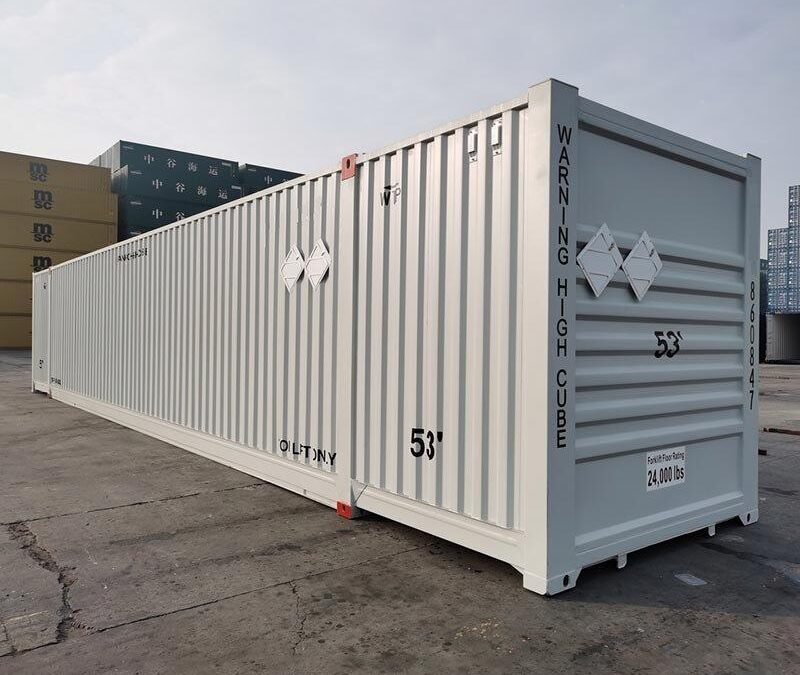
If you’re asking how much does a 53 ft sea container weight, the answer depends on the specific container manufacturer, construction and equipment.
A typical 53 ft high cube dry container has an empty or tare weight of around 10,800–11,200 lb (4,900–5,100 kg). Some models can be lighter or heavier, so the container’s identification or specification plate should always be checked for the exact weight.
For example, published specifications for 53 ft high cube containers commonly show a maximum gross weight of approximately 67,200 lb (30,480 kg) and a payload capacity of roughly 56,000 lb (25,400 kg).
How Much Does an Empty 53 Ft Sea Container Weigh?
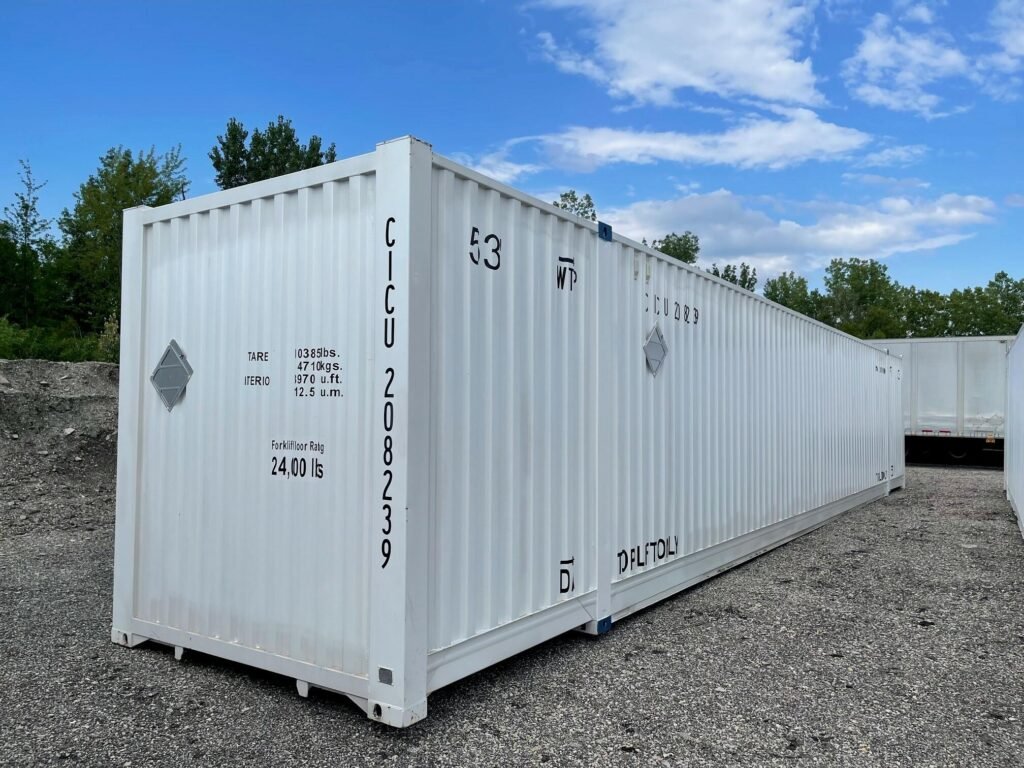
The empty weight of a 53 ft container is known as its tare weight.
A typical 53 ft high cube dry container weighs approximately:
| Specification | Approximate Weight |
|---|---|
| Tare weight | 10,800–11,200 lb |
| Tare weight in kilograms | 4,900–5,100 kg |
| Maximum gross weight | 67,200 lb |
| Maximum gross weight in kilograms | 30,480 kg |
| Typical maximum payload | About 56,000 lb |
| Typical maximum payload in kilograms | About 25,400 kg |
Container specifications vary between manufacturers. Container Technology, for example, lists a 53 ft high cube dry container with an estimated tare weight of 11,110 lb, a maximum gross weight of 67,200 lb, and a maximum payload of 56,090 lb.
What Is Tare Weight?
Tare weight means the weight of the empty container itself, before cargo is loaded.
It includes components such as:
- Steel walls and roof
- Floor
- Doors
- Corner castings
- Locking bars
- Structural framework
- Other permanently installed components
The tare weight does not include the cargo placed inside the container.
What Is the Maximum Weight of a 53 Ft Container?
A typical 53 ft high cube container has a maximum gross weight of approximately 67,200 lb (30,480 kg).
The maximum gross weight represents the combined weight of:
Container + cargo = maximum gross weight
For example:
11,110 lb container + 56,090 lb cargo = 67,200 lb gross weight
However, the maximum structural rating of the container does not automatically mean that this amount of cargo can legally be transported on every road or truck. Highway, axle and rail weight restrictions can impose lower practical limits.
How Much Cargo Can a 53 Ft Container Hold?
A typical 53 ft high cube container can have a payload capacity of approximately 56,000 lb (25,400 kg), although the exact figure varies according to the container design and tare weight.
For example, one published 53 ft specification gives:
- Tare: 11,110 lb
- Maximum gross: 67,200 lb
- Maximum payload: 56,090 lb
Why Payload Capacity Matters
Knowing the payload capacity is important when shipping or storing:
- Machinery
- Building materials
- Furniture
- Palletized products
- Industrial equipment
- Commercial goods
- Vehicles and components
Before loading heavy cargo, calculate the combined weight of the goods and container and compare it with the applicable container, road and transport limits.
53 Ft Container Dimensions and Weight
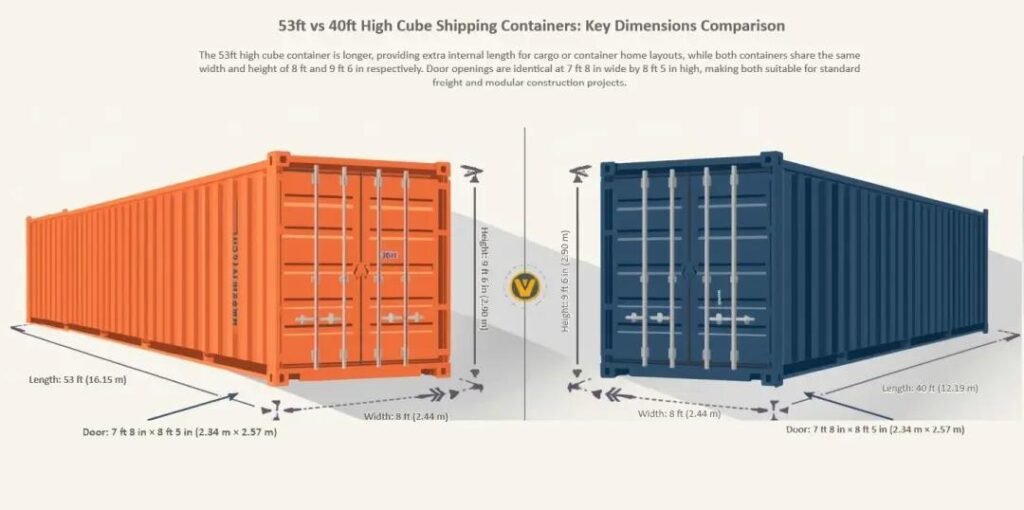
A typical 53 ft high cube container has external dimensions of approximately:
- Length: 53 ft
- Width: 8 ft 6 in
- Height: 9 ft 6 in
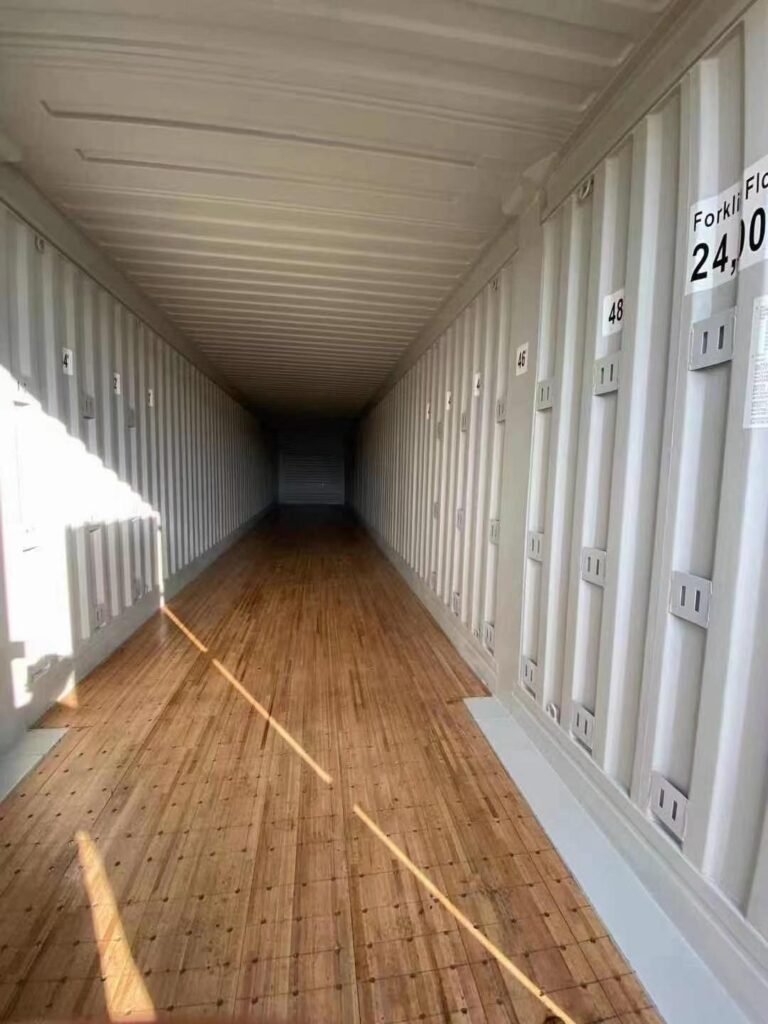
Published specifications commonly give internal dimensions of approximately 52 ft 5 in × 8 ft 2 in × 8 ft 11 in.
Why Are 53 Ft Containers So Large?
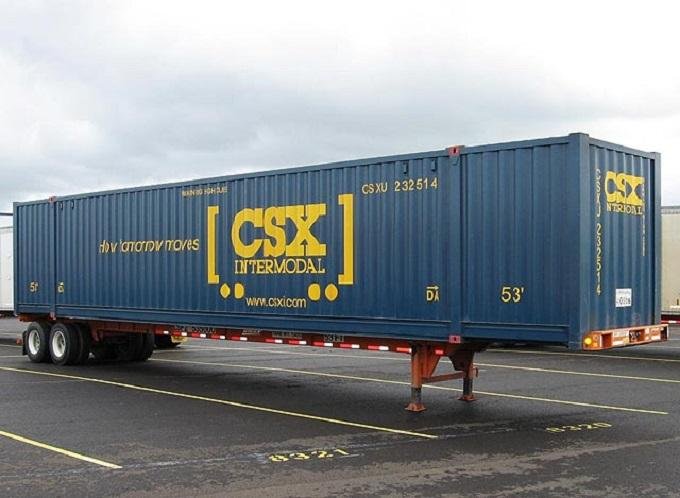
53 ft containers are designed primarily for North American domestic intermodal transportation. They provide considerably more internal cubic capacity than common 20 ft and 40 ft containers.
A 53 ft container can provide approximately 3,850 cubic feet of internal capacity, depending on the design.
Is a 53 Ft Container the Same as an Ocean Shipping Container?
53 Ft Containers vs Standard Ocean Containers
The term “sea container” is often used broadly for shipping containers, but 53 ft containers deserve some clarification.
Many 53 ft containers are domestic intermodal containers designed for use on North American road and rail networks rather than standard international ocean service. One current industry specification specifically describes the 53 ft domestic container as equipment outside the standard ISO 668 ocean-container size family.
This distinction matters if you are purchasing a container for international sea freight.
Why Does This Matter When Buying?
If your container will be transported internationally by sea, check:
- Container certification
- CSC plate requirements
- Carrier requirements
- Port requirements
- Dimensions
- Maximum gross weight
- Cargo weight
- Local transportation regulations
A container that is suitable for domestic storage or rail transportation may not automatically be suitable for an international ocean voyage.
What Factors Affect the Weight of a 53 Ft Container?
The exact weight can vary because containers aren’t all manufactured identically.
Construction Materials
Steel construction, floor materials and structural components can affect the tare weight.
Container Age
Older and newer containers can have different specifications and weights.
Container Type
A dry container, refrigerated container and specially modified container can have substantially different weights.
For example, published specifications for a 53 ft refrigerated container show an estimated tare weight of 9,458 lb, illustrating why container type matters when calculating weight.
Modifications
Additional equipment can increase the weight of a container.
Examples include:
- Refrigeration equipment
- Doors
- Ramps
- Internal partitions
- Electrical equipment
- Insulation
- Shelving
- Windows
- Specialized flooring
How Do You Find the Exact Weight of a 53 Ft Container?
Check the Container Specification Plate
The most reliable way to determine the weight of an individual container is to check its specification or safety plate.
Look for information such as:
- Tare weight
- Maximum gross weight
- Maximum payload
- Container identification number
- Certification information
Ask the Container Supplier
If you’re purchasing a 53 ft container, ask the seller for the manufacturer’s specifications for the specific unit you’re considering.
This is especially important if transportation costs or weight restrictions are involved.
Why Container Weight Matters When Planning Delivery
The weight of a 53 ft container can affect transportation planning.
A delivery company may need to consider:
- Container tare weight
- Cargo weight
- Truck capacity
- Chassis capacity
- Axle restrictions
- Road restrictions
- Loading equipment
- Crane or lifting requirements
- Site access
Don’t Confuse Container Weight With Loaded Weight
There is a major difference between:
Empty container: approximately 10,800–11,200 lb
and
Container + cargo: potentially up to around 67,200 lb gross, subject to the container’s rating and applicable transportation restrictions.
53 Ft Container Weight Compared With Other Containers
| Container Type | Typical Empty Weight |
|---|---|
| 20 ft standard | Around 5,000 lb |
| 40 ft standard | Around 8,000 lb |
| 40 ft high cube | Around 8,800 lb |
| 45 ft high cube | Around 9,800 lb |
| 53 ft high cube | Around 10,800–11,200 lb |
Exact specifications vary by manufacturer and container construction.
Frequently Asked Questions About 53 Ft Container Weight
How much does a 53 ft sea container weigh empty?
A typical empty 53 ft high cube dry container weighs approximately 10,800–11,200 lb (4,900–5,100 kg).
How much does a 53 ft container weigh when loaded?
It depends on the cargo. A typical container may have a maximum gross rating around 67,200 lb (30,480 kg), but actual legal transport weight can be lower depending on road, axle and equipment restrictions.
How much cargo can a 53 ft container carry?
Many 53 ft high cube dry containers have a rated payload of approximately 56,000 lb (25,400 kg). Always verify the exact rating on the individual container.
Are 53 ft containers used for international ocean shipping?
Many 53 ft containers are intended for domestic North American intermodal transportation rather than standard international ocean service. Always confirm the container’s certification and carrier requirements before planning an ocean shipment.
Does a 53 ft container weigh more than a 40 ft container?
Generally, yes. A typical 53 ft high cube weighs around 10,800–11,200 lb empty, while a typical 40 ft high cube is around 8,775 lb in one published specification.
Final Thoughts: How Much Does a 53 Ft Sea Container Weight?
So, how much does a 53 ft sea container weight?
For a typical 53 ft high cube dry container, you can expect an empty weight of roughly 10,800–11,200 lb (4,900–5,100 kg). Maximum gross weight is commonly around 67,200 lb (30,480 kg), with payload capacity around 56,000 lb (25,400 kg).
However, these figures are not universal. The exact weight depends on the manufacturer, construction, container type and modifications. Always check the individual container’s specification plate before arranging transportation or loading heavy cargo.
If you’re researching container purchasing options, you can also explore How Much Does a Shipping Container Cost? 2026 Price Guide on Sea Containers For Sale to learn more about the factors that affect container pricing.