How Much Does a 20 Foot Sea Container Weigh?
If you are planning to purchase, transport or use a shipping container for storage, one of the most important questions to consider is: How much does a 20 foot sea container weigh?
A standard 20-foot sea container is one of the most popular options for transporting goods, storing equipment and creating additional storage space. However, its weight is an important consideration when arranging delivery, choosing lifting equipment or calculating how much cargo it can carry.
Generally, an empty 20ft shipping container weighs approximately 2,200 kg (4,850 lbs). The exact weight depends on its manufacturer, construction materials, age and container type.
In this guide, we explain the empty weight, maximum payload, gross weight and other important specifications you should understand before purchasing a 20-foot sea container.
How Much Does a 20 Foot Sea Container Weigh When Empty?
A standard 20-foot sea container typically weighs between 2,000 kg and 2,400 kg (approximately 4,400–5,300 lbs) when empty, although some models fall outside this range. Manufacturer specifications should always be checked for the particular container you intend to purchase.
The weight of an empty container is known as its tare weight.
Tare weight includes the container’s permanent structure, such as its steel frame, walls, roof, floor and doors, but excludes the cargo stored inside it.
Average Weight of a Standard 20ft Shipping Container
Here are some typical specifications for a standard 20-foot dry shipping container.
| Specification | Approximate Weight |
|---|---|
| Empty container weight (tare) | 2,200 kg |
| Empty weight in pounds | 4,850 lbs |
| Maximum gross weight | 30,480 kg |
| Maximum gross weight in pounds | 67,200 lbs |
| Typical internal capacity | 33.2 m³ |
| Standard external dimensions | 20 ft × 8 ft × 8 ft 6 in |
These figures are representative rather than universal. Actual specifications vary between manufacturers and container models.
Why Does the Empty Weight Matter?
Knowing the empty weight of a 20-foot sea container is important for several reasons.
1. Transportation planning
Before arranging delivery, you need to know the container’s weight to select a suitable truck, trailer and lifting equipment.
2. Safe lifting and handling
Cranes, forklifts and other lifting equipment must be suitable for the container’s weight and lifting configuration.
3. Site preparation
The ground or foundation supporting your container must be suitable for its weight and intended use.
4. Delivery costs
The container’s weight can affect transport arrangements, equipment requirements and delivery costs.
Always Check the Container’s Weight Plate
Before moving or transporting a container, check its identification plate and door markings for the actual tare weight and maximum gross weight.
These markings provide important information about the individual unit. Do not rely exclusively on average figures when planning a lift or transport operation.
What Is the Maximum Weight of a 20 Foot Sea Container?
The maximum gross weight of a standard 20-foot sea container is commonly around 30,480 kg (67,200 lbs), although the rating varies by model.
Maximum gross weight means the combined weight of the empty container and its contents.
For example, if a container has a maximum gross weight of 30,480 kg and an empty weight of 2,200 kg, the theoretical remaining payload is 28,280 kg.
However, this is only a mathematical example. Always use the actual ratings displayed on your container rather than assuming every 20-foot container can carry the same load.
Understanding Tare Weight, Payload and Gross Weight
There are three important shipping container weight measurements you should understand.
Tare weight: The weight of the empty container without cargo.
Payload capacity: The maximum weight of cargo the container is permitted to carry under its specified rating.
Maximum gross weight: The maximum combined weight of the container and its cargo.
Understanding these measurements helps you choose a suitable container and avoid exceeding its rated capacity.
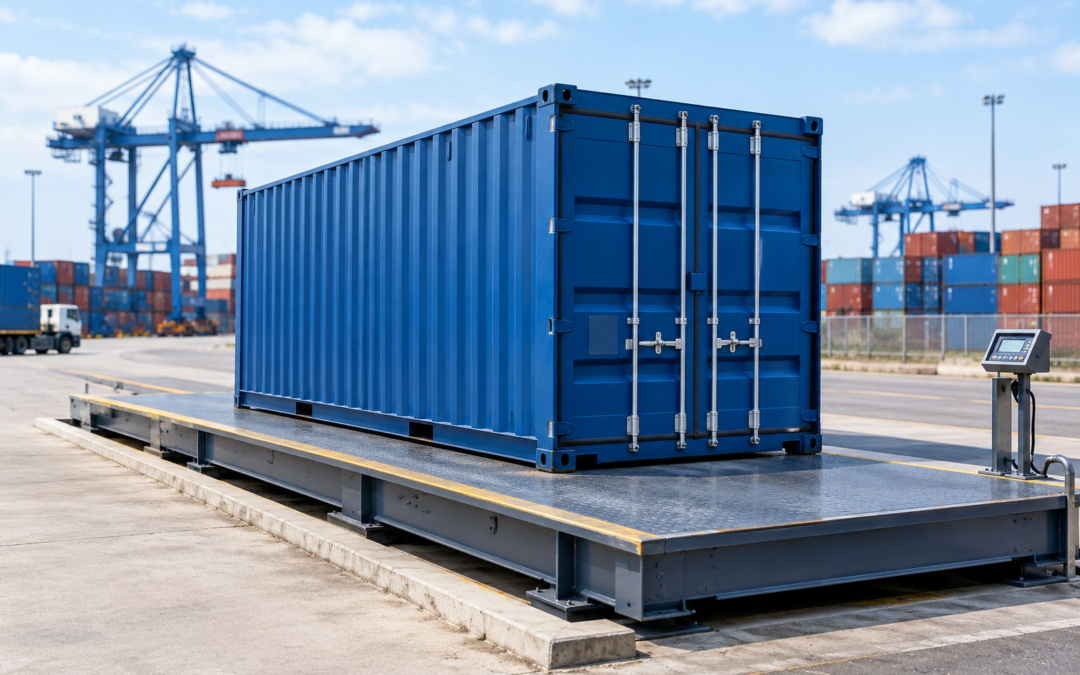
Example of a 20ft Container Weight Calculation
Consider a hypothetical 20-foot container with the following specifications:
| Measurement | Weight |
|---|---|
| Empty container weight | 2,200 kg |
| Cargo weight | 10,000 kg |
| Total loaded weight | 12,200 kg |
In this example, the loaded container weighs 12,200 kg.
The calculation is straightforward:
Gross weight = Tare weight + Cargo weight
12,200 kg = 2,200 kg + 10,000 kg
Remember that the container’s rated maximum gross weight is not necessarily the legal road-transport limit. The vehicle, axle loads, trailer, route and local regulations must also be considered.
What Factors Affect the Weight of a 20 Foot Sea Container?
Not every 20-foot sea container weighs exactly the same. Several factors can influence its overall weight.
1. Construction Materials
Most standard shipping containers use steel construction, although some models use aluminium components.
Differences in materials, flooring, structural reinforcement and manufacturing specifications can affect the empty weight.
2. Container Condition
A container’s age and condition may influence its actual weight.
Repairs, replacement flooring, additional steelwork and modifications can add weight. Rust or ordinary wear should not be treated as a reliable indication of how much a container weighs.
If you are buying a used container, inspect its condition and check its specifications before arranging delivery.
3. Container Type
Different types of 20-foot containers can have different weights.
For example:
- Standard dry container: Designed for general cargo and storage.
- Refrigerated container: Contains insulation and refrigeration equipment, making it heavier than many standard dry containers.
- Open-top container: Designed to accommodate certain types of cargo loaded from above.
- Specialised containers: May have additional equipment or structural features that affect their weight.
If your priority is storage, a standard dry container may be suitable. If you need specialised equipment, check the individual model’s weight specifications before buying.
How Modifications Affect Container Weight
Adding insulation, internal partitions, electrical installations, doors, windows or other modifications can increase the weight of a container.
This is particularly important if you intend to convert a container into a workshop, office or other usable space.
Why Accurate Weight Information Is Important
Accurate weight information supports safer transportation, appropriate equipment selection and better site preparation.
Always use the container’s actual specifications when calculating transport requirements or planning structural modifications.
What Are the Dimensions of a 20 Foot Sea Container?
Weight is not the only specification to consider when buying a sea container. Its dimensions determine how much space you have for storage and whether it will fit your intended location.
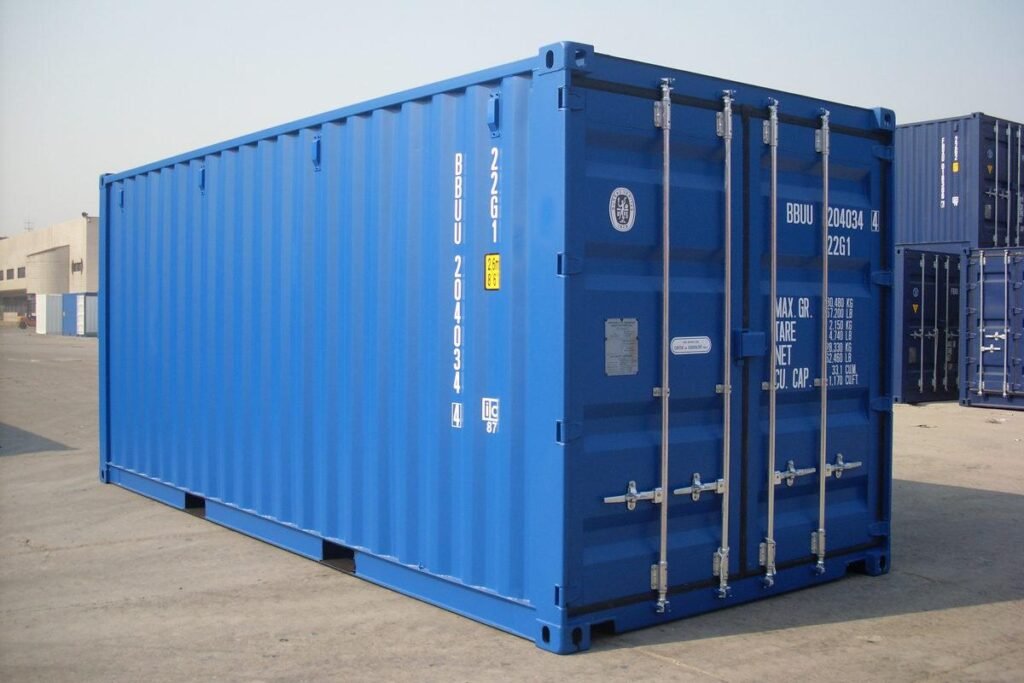
A standard 20-foot shipping container has external dimensions of approximately:
- Length: 20 feet (6.06 metres)
- Width: 8 feet (2.44 metres)
- Height: 8 feet 6 inches (2.59 metres)
Typical internal capacity is approximately 33.2 cubic metres, although usable dimensions vary by manufacturer and model.
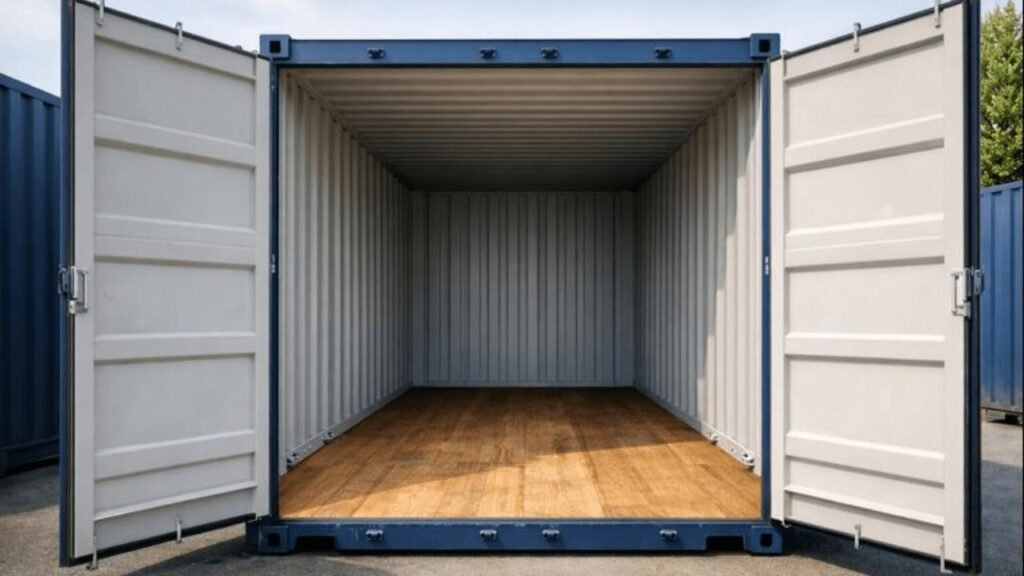
How Much Can a 20ft Container Hold?
A standard 20-foot dry container provides approximately 33 cubic metres of internal space.
However, the amount of cargo it can hold depends on both its available volume and its permitted payload.
Heavy goods may reach the maximum weight before the container is completely full, while lightweight goods may fill the available space without approaching the weight limit.
When loading a container, you should consider both factors.
Choosing Between a 20ft and 40ft Sea Container
A 20-foot container is often suitable for smaller storage requirements, equipment and compact deliveries.
A 40-foot container provides substantially more internal space and may be preferable when you need to store bulky goods or larger quantities of materials.
However, a longer container is not automatically capable of carrying twice the weight. Maximum payload depends on the specific container’s rating.
For more information, read our related guide: How Much Does a 53 ft Sea Container Weigh?
Check Your Available Space Before Ordering
Before purchasing a container, measure the intended installation area.
Allow enough room for delivery vehicles, lifting equipment, door operation and safe access. You should also consider overhead obstructions, access roads and the condition of the ground.
How Much Does a Loaded 20 Foot Sea Container Weigh?
The weight of a loaded 20-foot sea container depends on the empty container weight and the cargo placed inside it.
For example, consider the following hypothetical loading scenarios.
| Empty Container Weight | Cargo Weight | Total Weight |
|---|---|---|
| 2,200 kg | 2,000 kg | 4,200 kg |
| 2,200 kg | 5,000 kg | 7,200 kg |
| 2,200 kg | 10,000 kg | 12,200 kg |
| 2,200 kg | 15,000 kg | 17,200 kg |
These examples assume an empty container weighing 2,200 kg. Actual weights will vary.
Does Cargo Type Affect the Total Weight?
Yes. The weight of the contents is one of the main factors determining the total loaded weight.
For instance, a container filled with furniture may weigh considerably less than one carrying metal components, machinery or other dense materials.
When planning a shipment, estimate the cargo weight before loading and make sure the combined weight remains within the container’s rated limits.
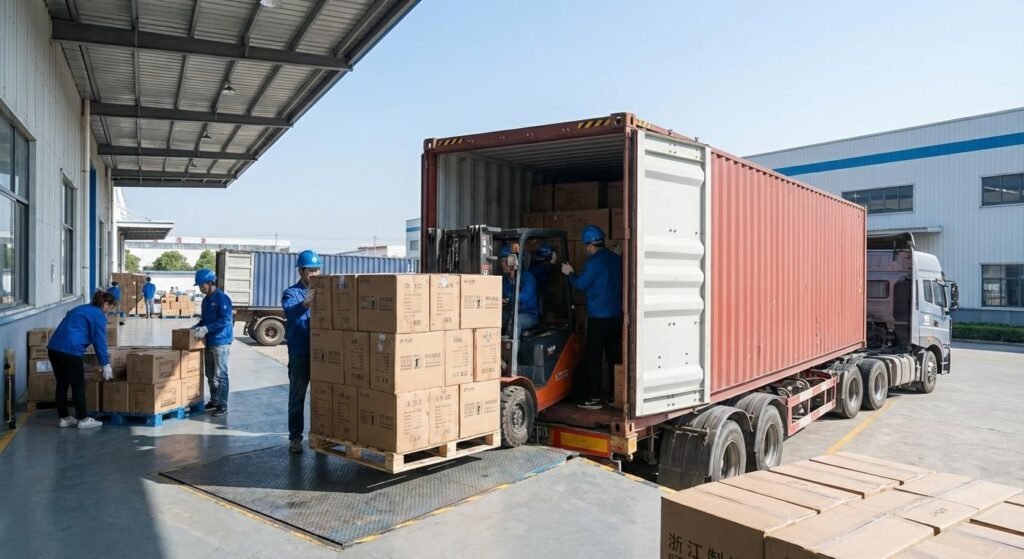
Can You Transport a Loaded 20ft Container by Road?
Yes, loaded containers can be transported by road, provided the vehicle, trailer, load distribution and transport arrangements comply with applicable requirements.
However, the container’s maximum gross weight is not permission to carry that weight on every road vehicle.
You must consider the truck’s capacity, trailer rating, axle limits and relevant transport regulations.
What Should You Check Before Delivery?
Before arranging delivery, confirm:
- The empty container’s actual weight.
- The weight and dimensions of any cargo.
- The transport vehicle’s capacity.
- The condition and load-bearing capacity of the installation site.
- Access for delivery and lifting equipment.
- Any applicable road-transport restrictions.
These checks can help prevent unnecessary delivery complications.
Is a 20 Foot Sea Container the Right Choice for You?
A 20-foot sea container can be a practical option for businesses, tradespeople, property owners and individuals who need secure storage space.
Its compact footprint makes it suitable for many applications, provided there is sufficient space for delivery and installation.
Common Uses for 20ft Sea Containers
A standard 20-foot container can be used for:
- Business inventory and equipment storage.
- Construction materials and tools.
- Agricultural supplies.
- Machinery and spare parts.
- Household furniture during renovations or relocation.
- General commercial storage.
The right choice depends on your available space, storage requirements, container condition and budget.
What to Consider Before Buying
Before choosing a container, consider the following questions:
- What will you store inside it?
- How much weight will the contents add?
- Do you need a standard container or a specialised model?
- Is the delivery location accessible?
- Do you need a cargo-worthy container or a unit intended primarily for static storage?
- What condition do you expect the container to be in?
Answering these questions will help you identify a suitable container for your requirements.
Find the Right Sea Container for Your Needs
If you are looking for a 20-foot sea container, visit Sea Containers For Sale to explore available options.
Compare the container’s condition, specifications and intended use before making a purchasing decision. Confirm its actual weight and delivery requirements with the seller before arranging transportation.
Frequently Asked Questions About 20 Foot Sea Container Weight
How much does an empty 20 foot sea container weigh?
An empty 20-foot standard dry container typically weighs around 2,200 kg (4,850 lbs). The actual tare weight varies by manufacturer and model.
How much does a 20ft shipping container weigh in pounds?
A typical empty 20-foot shipping container weighs approximately 4,850 lbs. Always check the container’s individual specifications for an accurate figure.
How much weight can a 20 foot sea container hold?
Payload capacity varies by container. Some standard models can carry approximately 28,000 kg of cargo, but the permitted payload must be confirmed using the container’s own specifications.
What is the maximum gross weight of a 20ft container?
A common maximum gross weight rating is approximately 30,480 kg (67,200 lbs). Some containers have different ratings, so check the identification plate before loading.
Is a 20ft container heavier than a 40ft container?
Generally, no. A standard 20-foot dry container weighs less when empty than a standard 40-foot dry container. A typical 20-foot container weighs around 2,200 kg, compared with approximately 3,750 kg for a standard 40-foot container.
Can a 20ft container be placed on ordinary ground?
A container can be installed on a suitable prepared surface, but the ground must be stable and capable of supporting the loads at the container’s support points. The appropriate foundation depends on soil conditions, loading and intended use.
Does a used 20ft container weigh more than a new one?
Not necessarily. Both new and used containers vary in weight according to their construction, flooring, repairs and modifications. Check the actual specifications of the individual unit.
How Much Does a 20 Foot Sea Container Weigh?
So, how much does a 20 foot sea container weigh?
A typical empty 20-foot standard dry container weighs approximately 2,200 kg (4,850 lbs). Its maximum gross weight is commonly around 30,480 kg (67,200 lbs), although both figures depend on the individual container’s specifications.
Understanding tare weight, payload capacity and maximum gross weight will help you select the right container, plan delivery and avoid overloading.
If you are searching for a container for business, personal storage or another project, visit Sea Containers For Sale to explore your options and identify a container that suits your needs.