Shipping Containers: Everything You Need to Know
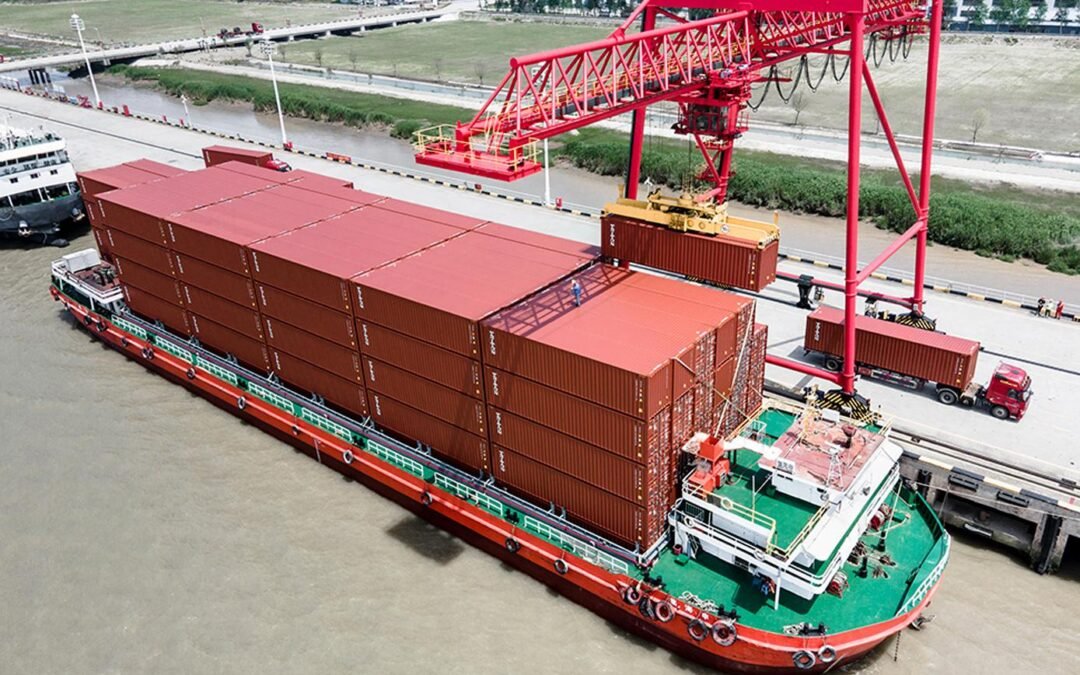
Shipping containers play an essential role in international trade, transportation and storage. From moving goods across oceans to providing secure storage for businesses and individuals, these versatile steel structures have transformed how products are transported and stored worldwide.
Whether you are looking for shipping containers for sale, planning an international shipping operation or considering a container for storage, understanding the different types, sizes and applications can help you make the right decision.
In this guide, Sea Containers For Sale explores everything you need to know about shipping containers, including their construction, dimensions, different types, benefits and common uses.
What Are Shipping Containers?
Shipping containers are large, standardized structures designed to transport and store goods safely. They are commonly manufactured using durable steel and engineered to withstand demanding transportation conditions.
They can be transported using different methods, including:
- Cargo ships.
- Freight trains.
- Trucks and trailers.
- Intermodal transportation systems.
Shipping containers are designed to make loading, unloading and transferring cargo between different transportation methods easier.
How Do Shipping Containers Work?
Shipping containers work through a standardized transportation system that allows goods to move between ships, trains and trucks without repeatedly unloading the cargo.
Their standardized dimensions and reinforced corner fittings make them suitable for stacking and lifting using specialized equipment.
Why Are Shipping Containers Standardized?
Standardization allows shipping companies and logistics operators worldwide to transport containers efficiently.
It also makes it easier to transfer containers between different transportation systems.
The Importance of Standard Shipping Container Dimensions
Standard dimensions help ensure compatibility with container ships, railway systems, trailers and handling equipment.
This consistency makes international freight transportation more efficient.
Different Types of Shipping Containers
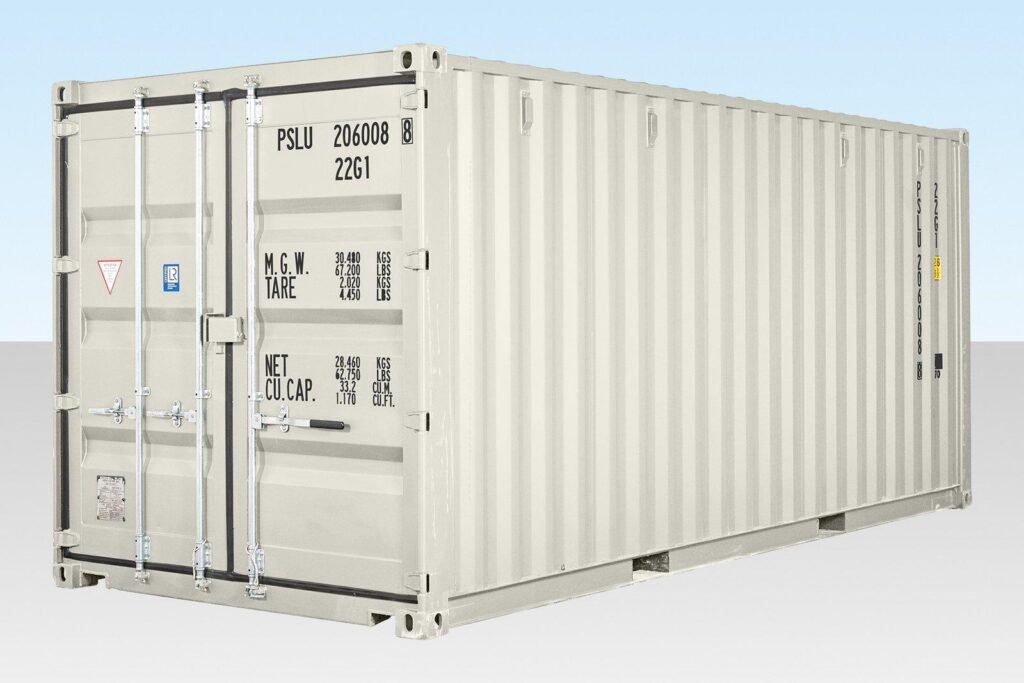
There are several types of shipping containers available, each designed for specific transportation, storage and commercial requirements.
Choosing the correct type depends on the cargo, available space, intended application and environmental conditions.
1. Standard Dry Shipping Containers
Standard dry shipping containers are among the most widely used container types worldwide.
They feature enclosed steel walls, a roof, a floor and secure cargo doors.
Common applications include:
- General cargo transportation.
- Business inventory storage.
- Construction equipment storage.
- Household goods transportation.
- Agricultural storage.
Common Standard Sizes
Standard dry containers are commonly available in:
Who Should Buy Standard Shipping Containers?
They are suitable for individuals, businesses, construction companies and logistics operators looking for versatile transportation or storage solutions.
2. High Cube Shipping Containers
High cube shipping containers provide additional internal height compared with standard-height containers.
A typical high cube container measures approximately 9ft 6in externally, compared with 8ft 6in for a standard-height container.
Their additional height makes them particularly useful for bulky cargo and projects requiring extra vertical space.
3. Refrigerated Shipping Containers
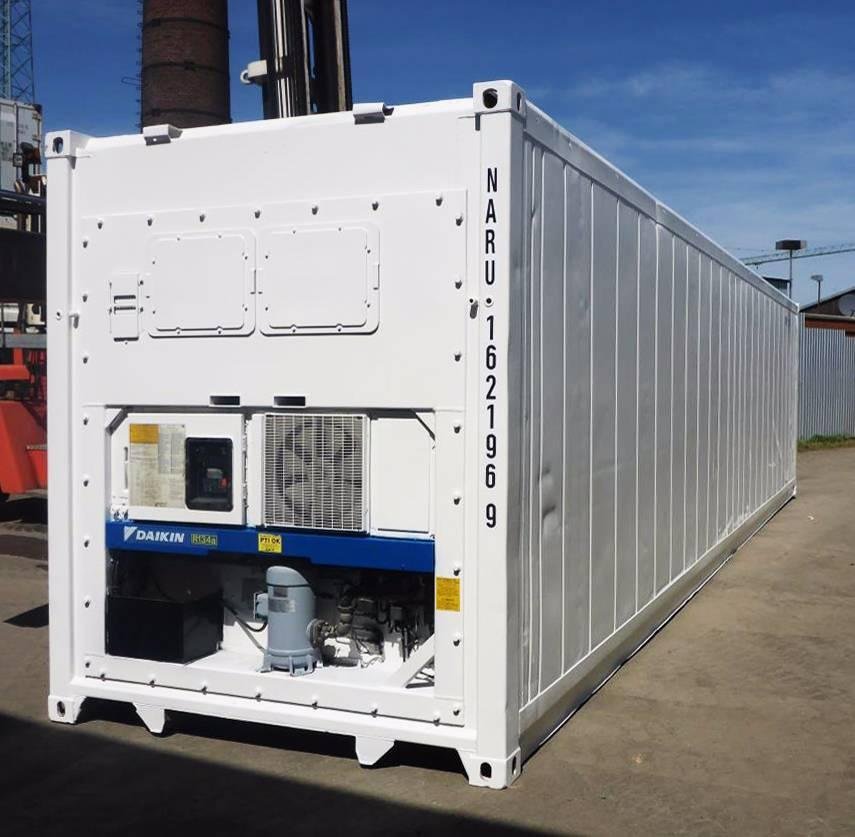
Refrigerated shipping containers, commonly called reefers, are designed to transport temperature-sensitive products.
They feature insulated walls and refrigeration equipment to maintain the required temperature.
Common applications include:
- Frozen food transportation.
- Fresh fruit and vegetables.
- Meat and seafood.
- Pharmaceutical products.
- Temperature-sensitive goods.
4. Open Top Shipping Containers
Open top containers feature a removable roof covering, allowing cargo to be loaded from above.
They are particularly useful for transporting tall machinery, industrial equipment and oversized goods.
5. Flat Rack Shipping Containers
Flat rack containers are designed for transporting oversized or unusually shaped cargo.
They typically feature reinforced floors and end walls without conventional full-length side walls.
Common applications include transporting:
- Heavy machinery.
- Industrial equipment.
- Vehicles.
- Large pipes.
- Construction materials.
Common Shipping Container Sizes and Dimensions
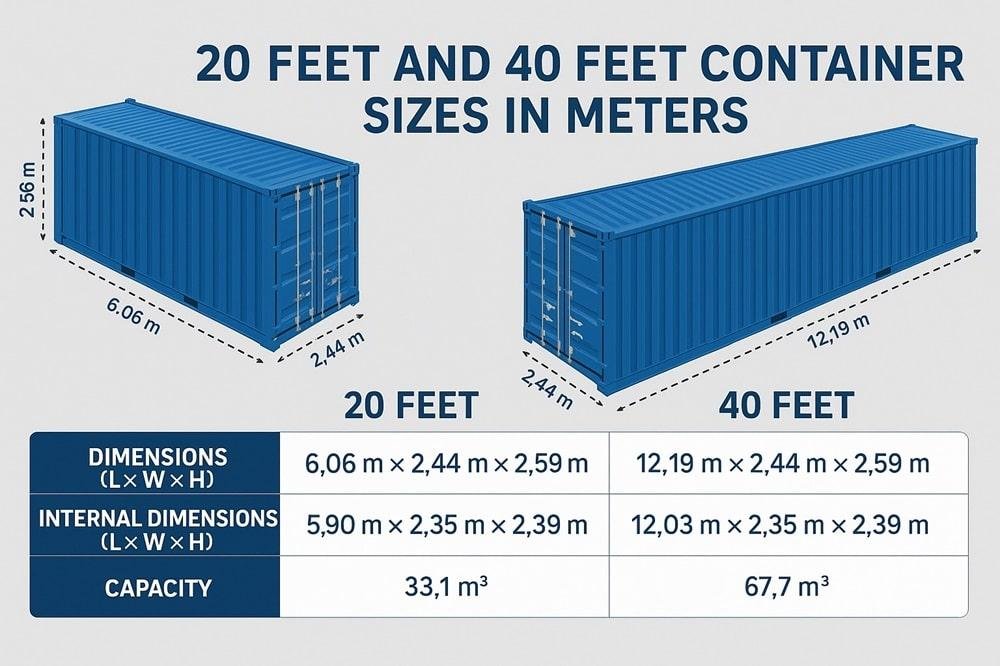
Shipping containers are available in different sizes to accommodate various transportation and storage requirements.
The most popular options include 20ft and 40ft containers.
Here is a general comparison:
| Container Size | External Length | External Width | External Height |
|---|---|---|---|
| 10ft | 10ft | 8ft | 8ft 6in |
| 20ft | 20ft | 8ft | 8ft 6in |
| 40ft | 40ft | 8ft | 8ft 6in |
| 40ft High Cube | 40ft | 8ft | 9ft 6in |
| 45ft High Cube | 45ft | 8ft | 9ft 6in |
20ft Shipping Containers
20ft shipping containers are popular because they offer a practical balance between storage capacity and space requirements.
They are commonly used for:
- Residential storage.
- Construction projects.
- Commercial inventory.
- Agricultural equipment.
- International freight.
Read our guide on How Much Does a 20 Foot Sea Container Weigh?
40ft Shipping Containers
40ft shipping containers offer approximately twice the internal volume of a standard 20ft container.
They are suitable for larger storage requirements, commercial operations and international cargo transportation.
Read our guide on How Much Does a 40 Foot Sea Container Weigh?
40ft High Cube Shipping Containers
These containers offer additional vertical storage space, making them useful for bulky products, equipment and container conversion projects.
What Are Shipping Containers Made Of?
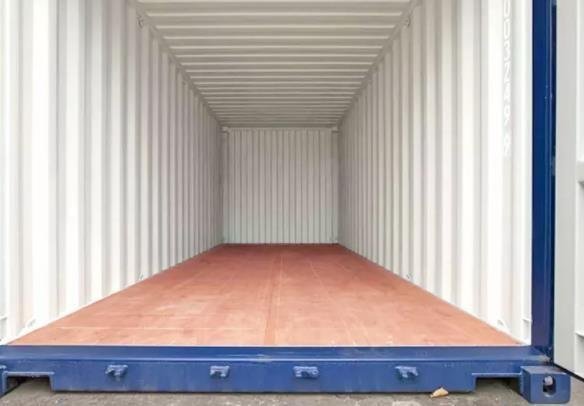
Most traditional shipping containers are manufactured using durable weathering steel, commonly known as Corten steel.
This material is selected because of its strength and resistance to atmospheric corrosion.
Other important components include:
- Steel corner posts.
- Corrugated steel panels.
- Reinforced flooring.
- Cargo doors.
- Locking mechanisms.
- Rubber door seals.
Read our blog on What Are Shipping Containers Made Of?
Why Is Steel Used for Shipping Containers?
Steel provides the strength required to support heavy cargo, withstand transportation conditions and allow containers to be stacked.
Shipping Container Flooring
Many conventional shipping containers feature marine-grade plywood flooring supported by steel cross-members.
The flooring is designed to support cargo loads under the container’s rated specifications.
What Are Shipping Containers Used For?
Shipping containers are no longer used exclusively for international transportation.
Their versatility has made them useful across several industries.
1. International Cargo Transportation
Shipping containers are essential to global trade.
They allow manufacturers, exporters and importers to transport products between countries efficiently.
2. Business and Commercial Storage
Businesses use shipping containers to store equipment, merchandise, tools and inventory.
Their secure construction makes them practical for additional storage space.
3. Shipping Container Homes
Shipping containers can be converted into residential buildings, guest houses and modern accommodation.
Read our blog on How to Build a Sea Container Home: A Complete Step-by-Step Guide.
4. Construction Site Offices
Construction companies frequently use modified shipping containers as temporary offices, staff facilities and equipment storage units.
5. Retail Shops and Restaurants
Shipping containers can be converted into pop-up shops, cafés, restaurants and commercial spaces.
Their modular construction provides flexibility for different business applications.

Benefits of Using Shipping Containers
Shipping containers offer several advantages for individuals and businesses.
Durability
Their steel construction makes them suitable for demanding transportation and storage environments.
Security
Strong doors and locking mechanisms help protect stored products and equipment.
Versatility
Shipping containers can be used for transportation, storage, commercial applications and building projects.
Easy Transportation
Their standardized construction allows them to be transported using specialized trucks, trains and cargo ships.
Cost-Effective Storage
Purchasing a suitable used shipping container can provide additional storage space without constructing a permanent building.
New vs Used Shipping Containers: Which Should You Buy?
When searching for shipping containers for sale, buyers often have to choose between new and used units.
Both options have advantages depending on your budget and intended application.
| Feature | New/One-Trip Containers | Used Shipping Containers |
|---|---|---|
| Appearance | Usually better | Varies |
| Previous use | Minimal | Previously used |
| Price | Generally higher | Generally lower |
| Repairs | Usually fewer | May require repairs |
| Availability | Depends on location | Often widely available |
When Should You Buy a New Shipping Container?
New or one-trip containers are suitable when appearance, minimal previous use and overall condition are important.
When Should You Buy Used Shipping Containers?
Used containers can be an economical option for general storage and projects where cosmetic appearance is less important.
Before purchasing, inspect the roof, doors, flooring, corner castings and structural components.
Read our guide to Used Shipping Containers.
What to Consider Before Buying Shipping Containers
Before purchasing a container, consider several important factors.
1. Determine the Right Size
Choose a container based on your storage capacity, transportation requirements and available space.
2. Check the Container Condition
Inspect the container for rust, damage, water penetration, floor problems and previous repairs.
3. Consider Your Intended Application
Determine whether you need a container for international shipping, storage, construction or conversion.
4. Understand Delivery Requirements
Consider transportation costs, delivery access, ground conditions and unloading requirements.
5. Compare Prices
Compare different suppliers and request quotations that include delivery wherever possible.
For more buying advice, read our Complete Shipping Container Buying Guide.
Where Can You Buy Shipping Containers?
If you are looking for reliable shipping containers for commercial, residential or transportation purposes, choosing an established supplier is important.
At Sea Containers For Sale, we help individuals and businesses explore different container options according to their requirements.
Whether you need a 20ft container, a 40ft container, a high cube container or a specialized unit, comparing specifications and condition is essential.
Visit Sea Containers For Sale to explore available containers and find a suitable solution for your project.
Frequently Asked Questions About Shipping Containers
What are shipping containers used for?
Shipping containers are used for international cargo transportation, commercial storage, construction projects, agricultural storage, offices and residential conversions.
What is the most common shipping container size?
The 20ft and 40ft shipping containers are among the most widely used sizes in international freight transportation and storage.
How long do shipping containers last?
Their lifespan depends on construction quality, previous use, environmental conditions and maintenance. Well-maintained containers can remain useful for many years.
Are shipping containers waterproof?
Shipping containers designed for cargo transportation are generally weather-resistant. However, their condition, door seals, roof and structural integrity should be inspected regularly.
Are used shipping containers worth buying?
Yes. Used shipping containers can offer excellent value when they are structurally sound and suitable for their intended application.
Can shipping containers be modified?
Yes. Shipping containers can be modified with windows, doors, insulation, ventilation, electrical installations and other features.
Where can I find shipping containers for sale?
You can explore available options through specialist suppliers such as Sea Containers For Sale, which offers different container solutions for commercial and residential requirements.
Final Thoughts on Shipping Containers
Shipping containers have become an important part of international trade, logistics, commercial storage and modern construction.
Their durability, versatility and standardized dimensions make them useful for businesses and individuals worldwide.
Whether you need a container for transporting cargo, storing equipment, building an office or creating a residential space, choosing the correct size, type and condition will help you get the best value.
At Sea Containers For Sale, we make it easier to explore container options and find solutions that match your requirements.
Ready to find your next container? Visit Sea Containers For Sale today and explore our available shipping containers.