How Many Containers Can a Container Ship Carry? Complete Guide
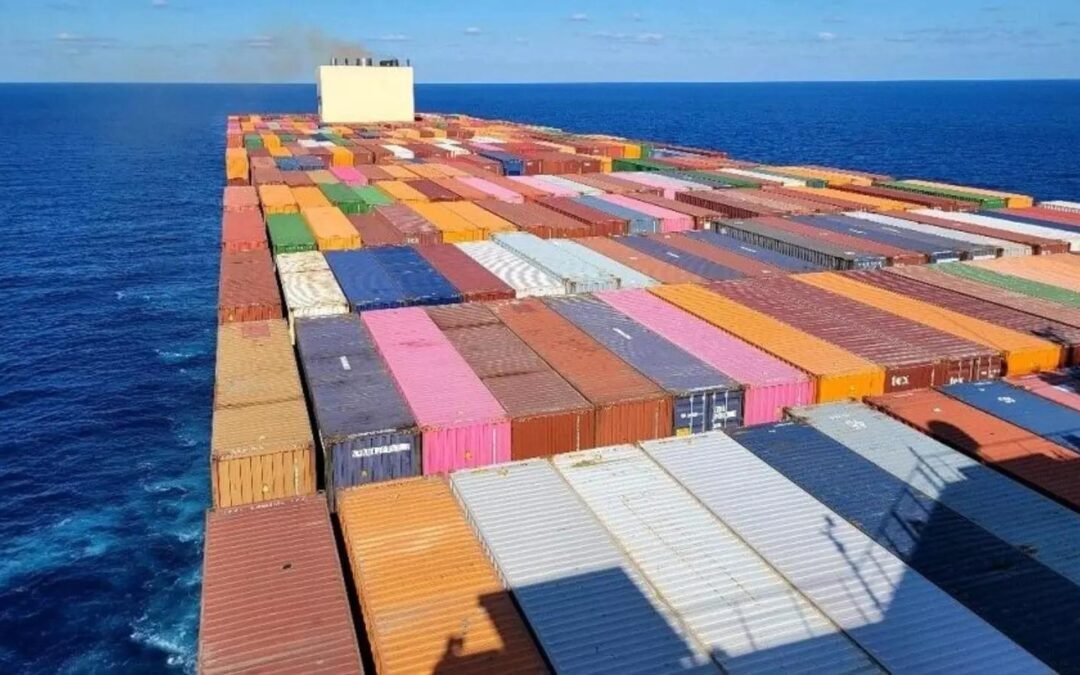
Container ships play an essential role in international trade, transporting millions of tonnes of goods across oceans every year. From food products and electronics to vehicles, machinery and construction materials, these enormous vessels help connect businesses and markets worldwide.
But have you ever wondered how many containers can a container ship carry?
The answer depends on the size, design and carrying capacity of the vessel. Smaller container ships may transport a few hundred containers, while the world’s largest vessels can accommodate more than 24,000 twenty-foot equivalent units (TEUs).
In this guide, Sea Containers For Sale explains container ship capacity, the different types of container vessels, how shipping capacity is measured and what determines the number of containers a ship can transport.
How Many Containers Can a Container Ship Carry?
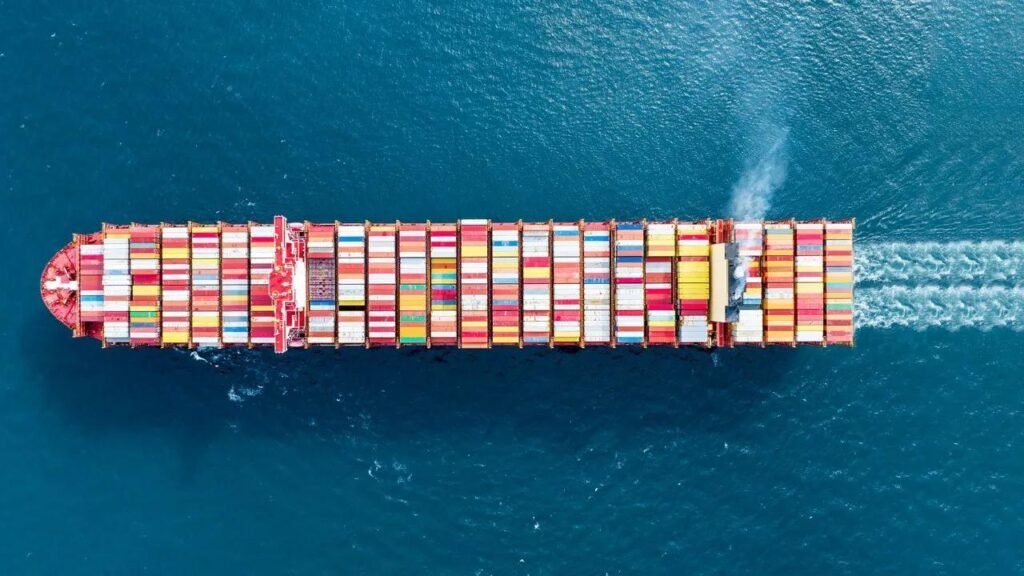
A container ship can carry anywhere from a few hundred containers to more than 24,000 twenty-foot equivalent units (TEUs), depending on its size and design.
Smaller feeder vessels generally carry between 300 and 3,000 TEUs, while larger ocean-going container ships can transport between 10,000 and 18,000 TEUs.
The largest ultra-large container vessels can carry approximately 24,000 TEUs or more.
However, it is important to understand that TEU capacity does not always represent the actual number of physical containers onboard.
For example:
- A 20-foot shipping container counts as 1 TEU.
- A 40-foot shipping container counts as 2 TEUs.
- A ship carrying 20,000 TEUs could accommodate 20,000 standard 20-foot containers or approximately 10,000 standard 40-foot containers.
The actual number depends on the combination of container sizes and cargo weight.
What Does TEU Mean in Container Shipping?
TEU stands for Twenty-foot Equivalent Unit. It is the standard measurement used throughout the shipping industry to describe container capacity.
This measurement makes it easier to compare the carrying capacity of different container ships.
Understanding TEU and FEU
There are two commonly used measurements in container shipping:
1. TEU (Twenty-foot Equivalent Unit)
One TEU represents the space occupied by a standard 20-foot shipping container.To know more about container weights check our blog How much deos a 20 foot container weigh
2. FEU (Forty-foot Equivalent Unit)
One FEU represents the space occupied by a standard 40-foot shipping container. It is equivalent to 2 TEUs.For more information on this container weigh check our blog How much deos a 40 foor container weigh
Understanding these measurements helps explain why a container ship advertised as having a capacity of 24,000 TEUs does not necessarily carry 24,000 physical containers.
Different Types of Container Ships and Their Carrying Capacity
Container ships come in different sizes depending on their intended routes, cargo requirements and port infrastructure.
Below are some common container ship categories and their approximate carrying capacities.
1. Small Feeder Container Ships
Small feeder vessels are designed to transport containers between smaller ports and major shipping terminals.
They typically carry approximately 300–1,000 TEUs, although larger feeder vessels can carry more.
These vessels help connect smaller ports to international shipping networks.
2. Feeder Container Ships
Larger feeder vessels generally carry between 1,000 and 3,000 TEUs.
They transport containers over regional routes and help distribute cargo from major ports to smaller destinations.
3. Panamax Container Ships
Panamax vessels were traditionally designed to fit through the original Panama Canal locks.
They typically carry approximately 3,000–5,000 TEUs.
Their dimensions were restricted by the width and length of the original canal locks.
4. Post-Panamax Container Ships
Post-Panamax vessels are larger than traditional Panamax ships.
They generally carry approximately 5,000–10,000 TEUs.
These vessels are designed for major international shipping routes and require ports with suitable infrastructure.
5. Ultra-Large Container Ships
Ultra-large container vessels are among the biggest cargo ships operating internationally.
They can carry approximately 18,000–24,000 TEUs or more.
These enormous vessels transport large quantities of goods between major international ports, particularly along busy Asia-Europe shipping routes.For more information on how long these ships make at sea check our blog How Long Are Shipping Containers At Sea.
What Is the Largest Number of Containers a Ship Can Carry?
The largest modern container ships can accommodate approximately 24,000 TEUs or more.
Some vessels have a nominal capacity exceeding 24,000 twenty-foot equivalent units.
To understand this capacity:
- 24,000 TEUs represent 24,000 standard 20-foot containers.
- The same capacity represents approximately 12,000 standard 40-foot containers.
- A combination of 20-foot and 40-foot containers can also be transported.
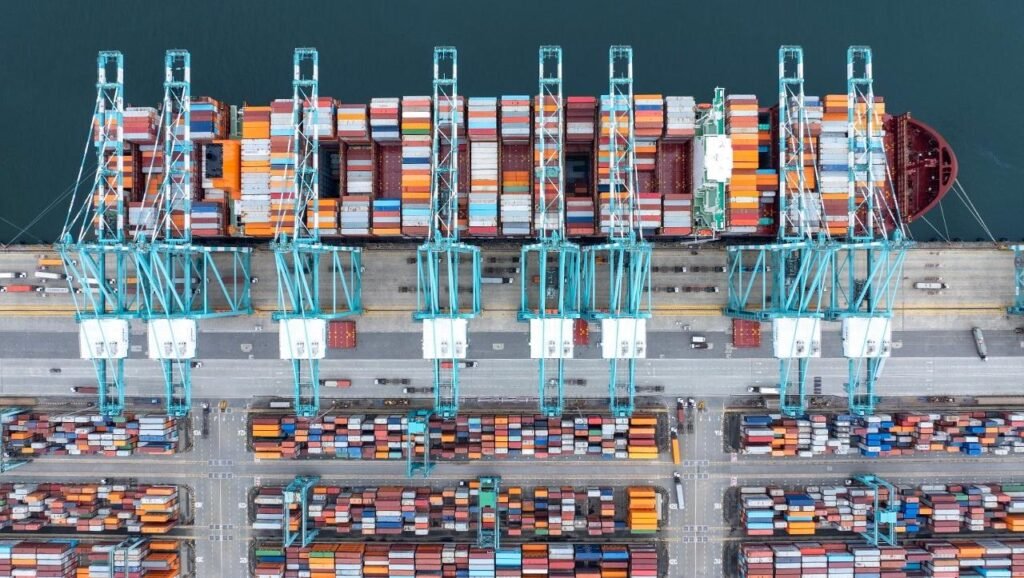
These ships can measure close to 400 metres in length and approximately 60 metres in width.
Their enormous size allows shipping companies to transport substantial quantities of cargo in a single voyage.
However, the actual number of containers carried depends on weight restrictions, cargo distribution and operational requirements.
How Are Containers Loaded Onto Container Ships?
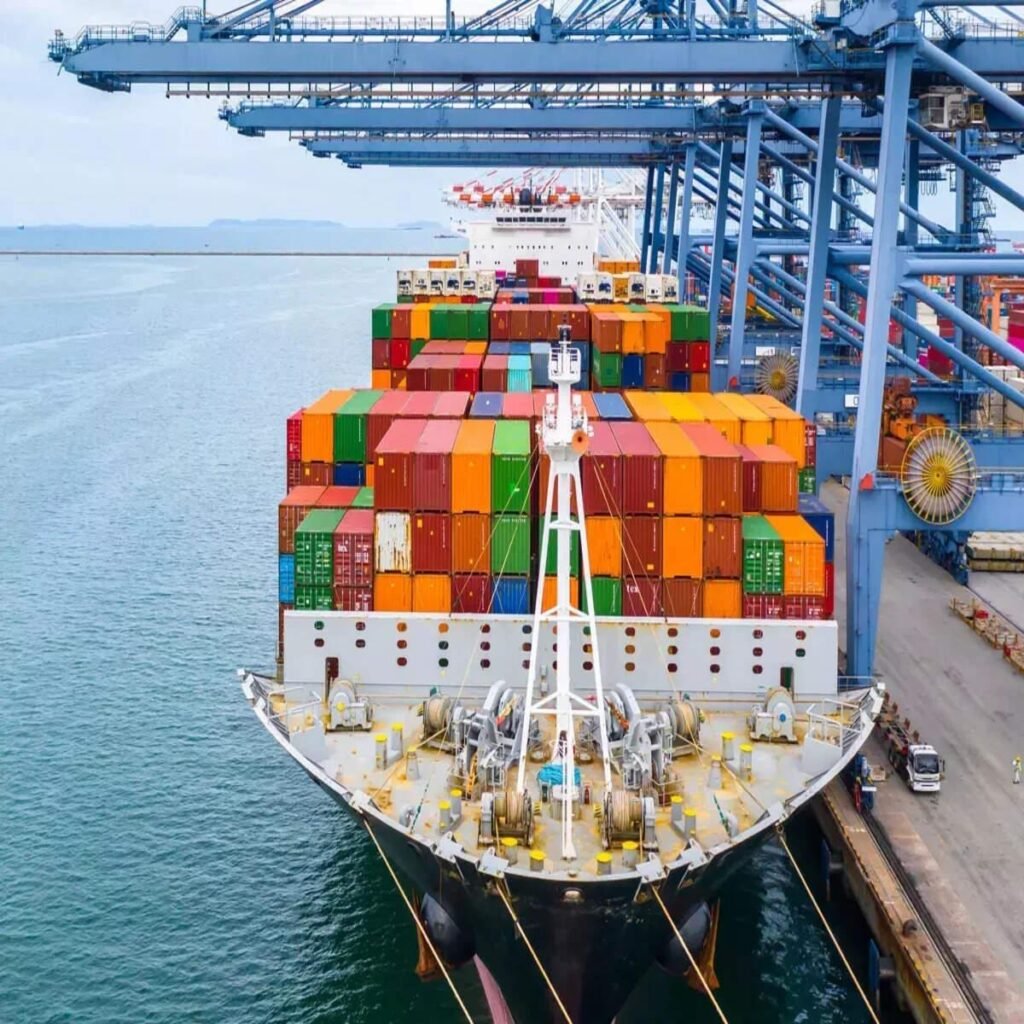
Container ships are specially designed to transport standardised shipping containers safely and efficiently.
Containers are positioned both below deck and above deck.
Containers Below Deck
Many containers are stored inside the ship’s cargo holds.
Specialised cell guides help position and secure containers in their designated spaces.
This arrangement allows shipping companies to transport large quantities of cargo while maintaining an organised loading system.
Containers Above Deck
Additional containers are stacked on top of the ship’s deck.
They are secured using specialised locking mechanisms and lashing equipment to reduce movement during transportation.
The height and arrangement of these stacks depend on the ship’s design, safety requirements and operating conditions.
How Many Containers Can Be Stacked on a Container Ship?
The number of containers stacked vertically varies between vessels.
Larger container ships can accommodate multiple tiers of containers above deck and below deck.
The arrangement depends on factors such as:
- Ship dimensions.
- Container weight.
- Vessel stability.
- Weather conditions.
- Safety requirements.
- Cargo distribution.
Why Is Proper Container Stacking Important?
Correct container stacking is essential for maintaining vessel stability and protecting cargo.
Improperly secured containers can shift during rough weather, potentially damaging cargo and creating serious safety risks.
What Factors Determine How Many Containers a Ship Can Carry?
Several factors influence the number of shipping containers a vessel can transport.
1. Ship Size and Dimensions
The physical dimensions of a container ship determine how many container positions can be accommodated.
Longer and wider ships generally have more space for containers.
2. Container Weight
Weight is one of the most important considerations when determining cargo capacity.
A vessel may have enough physical space for additional containers but still reach its permitted weight limit.
3. Container Sizes
Shipping containers come in different dimensions, with 20-foot and 40-foot containers being among the most common.
A 40-foot container occupies approximately twice the length of a 20-foot container in terms of TEU capacity.
4. Cargo Distribution
Containers must be distributed carefully to maintain the ship’s balance and stability.
Heavy containers are positioned according to the vessel’s approved loading plan.
5. Port Infrastructure
Not every port can accommodate the world’s largest container ships.
Ports require suitable water depth, berths, cranes and cargo-handling facilities.
6. Weather and Safety Conditions
Weather conditions, sea conditions and operational safety requirements can influence how a vessel is loaded.
Shipping companies must ensure that cargo is secured correctly before departure.
How Has Container Ship Capacity Increased Over the Years?
Container ships have increased considerably in size since the introduction of modern containerised shipping.
Early container vessels transported relatively small numbers of containers compared with today’s enormous cargo ships.
As international trade expanded, shipping companies invested in larger vessels to improve transportation efficiency.
Modern container ships can transport tens of thousands of TEUs on a single voyage.
This growth has helped reduce transportation costs per container and improve the movement of goods between international markets.
However, larger vessels also require more advanced port infrastructure and specialised cargo-handling equipment.
Why Are Large Container Ships Important to International Trade?
Large container ships are essential to the global economy.
They allow businesses to transport substantial quantities of products between countries while benefiting from economies of scale.
Some important advantages include:
Lower Transportation Costs
Transporting thousands of containers on one vessel can help reduce the average transportation cost per container.
Improved Cargo Efficiency
Container ships make it possible to transport large quantities of goods using standardised cargo units.
International Business Opportunities
Businesses can purchase and sell products internationally because of the availability of reliable maritime transportation networks.
Better Supply Chain Management
Container shipping supports international manufacturing, retail distribution and commercial logistics.
Frequently Asked Questions About Container Ship Capacity
How many containers can the biggest container ship carry?
The biggest container ships can carry approximately 24,000 TEUs or more. This represents up to 24,000 standard 20-foot containers or approximately 12,000 standard 40-foot containers.
How many 40-foot containers can a container ship carry?
A container ship with a capacity of 20,000 TEUs could theoretically accommodate approximately 10,000 standard 40-foot containers.
The actual number depends on the vessel’s design, cargo weight and loading arrangements.
How many containers does an average cargo ship carry?
Container ship capacity varies significantly. Smaller feeder vessels may carry a few hundred to several thousand TEUs, while large ocean-going vessels can carry more than 10,000 TEUs.
What does TEU mean in shipping?
TEU means Twenty-foot Equivalent Unit. It is the standard measurement used to calculate and compare the carrying capacity of container ships.
How long is the world’s largest container ship?
The largest modern container ships can measure approximately 400 metres in length, depending on the vessel.
Can container ships carry both 20-foot and 40-foot containers?
Yes. Container ships are designed to transport different standardised container sizes, including 20-foot and 40-foot containers. Some vessels can also accommodate other specialised container types.
Why don’t container ships always carry their maximum capacity?
Container ships cannot always use every available container position because of weight restrictions, cargo distribution, stability requirements, refrigerated cargo requirements and operational limitations.
For more information you can als check our blog on Freight Containers.
Final Thoughts: How Many Containers Can a Container Ship Carry?
So, how many containers can a container ship carry?
The answer depends on the vessel’s size and carrying capacity. Smaller feeder ships may carry hundreds or a few thousand TEUs, while the largest modern container ships can accommodate approximately 24,000 TEUs or more.
Container ships have become increasingly important to international trade because they allow businesses to transport enormous quantities of goods efficiently across the world’s oceans.
At Sea Containers For Sale, we understand the importance of shipping containers in global transportation, business operations and storage.
Whether you are looking for a standard 20-foot container, a 40-foot container or a specialised storage solution, choosing the right container starts with understanding your requirements.
Visit Sea Containers For Sale to explore our range of shipping containers and find the right solution for your needs.