
Complete Guide to Buying Shipping Containers for Sale in 2026
Buying a shipping container for sale should feel straightforward — not confusing. Whether you need secure storage for a farm, a site office for a construction crew, or a blank canvas for a container home, the right sea container can save money, time, and headaches. At Sea Containers For Sale, we help buyers compare sizes, grades, and delivery options with clear, practical advice.
This guide walks you through everything that matters before you purchase: container types, sizes, condition grades, delivery, inspection tips, and the questions people actually ask before they buy. Use the table of contents below to jump to any section.
Table of Contents
- Why Buy a Sea Container in 2026?
- Types of Shipping Containers Explained
- Standard Sizes: 10ft, 20ft, 40ft & High Cube
- Condition Grades: New, One-Trip & Used
- How to Buy a Shipping Container Step by Step
- Delivery, Placement & Site Prep
- What to Inspect Before You Pay
- Frequently Asked Questions
- Next Steps
Why Buy a Sea Container in 2026?
From storage and workshops to offices and homes, there are many best uses for sea containers. From storage and workshops to offices and homes, there are many best uses for sea containers. Steel shipping containers (often called sea containers or cargo containers) are built for ocean freight — which means they are weatherproof, stackable, lockable, and tough. That same strength makes them excellent for land use once they leave the shipping lane.
- Security: Heavy-gauge steel and lockable doors deter theft better than most wooden sheds.
- Mobility: Containers can be relocated with a truck and crane when your needs change.
- Speed: You can have storage or a site building online faster than traditional construction.
- Value: Used and one-trip units often cost far less than building a comparable structure from scratch.
- Versatility: Storage, workshops, pop-up shops, offices, farms, and modular homes all start with the same box.
Who Buys Shipping Containers?
Buyers come from many industries, but their goals usually fall into a few clear buckets.
- Construction companies needing tool storage and site offices
- Farms and landowners needing weatherproof equipment storage
- Warehouses and logistics firms expanding overflow capacity
- Homeowners converting containers into studios, gyms, or ADUs
- Retailers and event teams creating pop-up or temporary spaces
- Government and industrial buyers requiring secure portable units
Human Tip: Start With the Job, Not the Box
Before you compare prices, write down what the container must do for you in the next 12–24 months. Storage-only buyers care most about wind/water tightness and door seals. Conversion buyers care more about height, floor condition, and how easy it is to cut windows and doors. That one decision narrows your options fast.
Types of Shipping Containers Explained
Not every container is a standard dry box. Knowing the type helps you avoid paying for features you do not need — or missing features you do.
| Container Type | Best For | Key Feature |
|---|---|---|
| Dry van (standard) | General storage, offices, conversions | Fully enclosed steel box |
| High cube | Workshops, living spaces, taller storage | Extra interior height (~9’6″ exterior) |
| Open top | Tall machinery, awkward loads | Removable roof / tarp top |
| Flat rack | Oversized cargo, machinery | Collapsible or open sides |
| Refrigerated (reefer) | Temperature-sensitive goods | Insulated walls + cooling unit |
| Double door / tunnel | Drive-through storage, easy loading | Doors on both ends |
Standard Dry Containers
This is the classic sea freight container most people picture. Corrugated steel walls, plywood or bamboo flooring, and cargo doors on one end. For most storage and conversion projects, this is the right starting point.
When a Dry Container Is Enough
- Tools, inventory, and seasonal equipment storage
- Jobsite lockups and material sheds
- Simple office or workshop builds with added insulation later
When You Should Consider a Specialty Unit
Choose a high cube if people will stand and work inside. Choose a reefer only if temperature control is essential — reefers cost more and may need power or conversion work. Open tops and flat racks are usually for cargo handling, not everyday storage.
Quick Decision Shortcut
- Need climate control? Look at reefers or insulated conversions.
- Need standing headroom? Choose high cube.
- Need access from both ends? Choose double-door / tunnel.
- Otherwise, a standard dry 20ft or 40ft is usually best.
Pro Note on Wind & Water Tightness
Ask every seller whether the unit is certified wind and water tight (WWT). For outdoor storage, that single detail matters more than cosmetic paint scratches.
Standard Sizes: 10ft, 20ft, 40ft & High Cube
ISO shipping containers follow global size standards, which is why delivery trucks, cranes, and chassis are built around them.
| Size | Approx. Exterior Length | Typical Interior Volume | Common Uses |
|---|---|---|---|
| 10ft | ~10 feet | Compact | Tight sites, small tool stores |
| 20ft | ~20 feet | ~1,170 cu ft | Farms, small businesses, starter conversions |
| 40ft | ~40 feet | ~2,350 cu ft | Warehousing, larger workshops, multi-room builds |
| 40ft high cube | ~40 feet × taller | ~2,700 cu ft | Offices, homes, retail, high racking |
How to Choose Between 20ft and 40ft
For a deeper size breakdown, see our full comparison of 20ft vs 40ft shipping containers. For a deeper size breakdown, see our full comparison of 20ft vs 40ft shipping containers. A 20ft container is easier to place on smaller lots and usually cheaper to buy and deliver. A 40ft container roughly doubles storage capacity and often works better if you plan interior rooms. Measure your access road, gate width, and turning radius before you order — delivery day is a bad time to discover the truck cannot enter.
Site Access Checklist
- Can a delivery truck and trailer reach the drop point?
- Is the ground level enough for safe unloading?
- Do you need a crane, sideloader, or tilt-bed truck?
- Are there overhead wires or tree limbs in the way?
- Do local rules require a permit for placement?
Condition Grades: New, One-Trip & Used
If you are weighing cosmetics versus budget, read new vs used shipping containers next. If you are weighing cosmetics versus budget, read new vs used shipping containers next. Condition affects price, appearance, and how much work you will do after delivery. Sellers use different labels, so always ask what the grade means in writing.
- New / one-trip: Usually made a single ocean voyage. Cleanest look, higher price, best for visible conversions.
- Cargo worthy: Structurally sound for shipping; may show wear but remains strong.
- Wind & water tight (WWT): Keeps weather out; cosmetic rust or dents may still exist.
- As-is: Cheapest option; inspect carefully for holes, soft floors, or door issues.
What “Used” Really Means
Used does not automatically mean bad. Many used containers still provide years of secure storage. The key is honest photos, a clear grade description, and knowing whether repairs are included.
Budget vs. Appearance Trade-Off
- Hidden backyard storage → used WWT can be perfect.
- Customer-facing shop or office → prefer one-trip or refurbished.
- Major renovation planned → floor and structure matter more than paint.
How to Buy a Shipping Container Step by Step
A calm buying process prevents expensive surprises.
- Define the purpose: storage, office, workshop, home, or retail.
- Choose size and type: 20ft, 40ft, high cube, or specialty.
- Set a grade target: one-trip, WWT, or as-is with repairs.
- Confirm delivery method: tilt-bed, crane, or chassis drop.
- Request recent photos: doors, roof, floor, corners, and CSC plate if available.
- Ask about modifications: vents, personnel doors, windows, shelving, electrical prep.
- Review total cost: container + delivery + placement + any permits.
- Schedule delivery and site prep: clear the pad and mark exact placement.
Questions to Ask Every Seller
- Is the unit wind and water tight?
- What is the exact exterior and interior height?
- Are there holes, soft floors, or door alignment issues?
- What does delivery include, and how is the unit unloaded?
- Can I get a written quote with size, grade, and delivery fee?
Delivery, Placement & Site Prep
Delivery is where many first-time buyers get stuck. Plan the drop zone like a small construction task.
Prepare the Ground
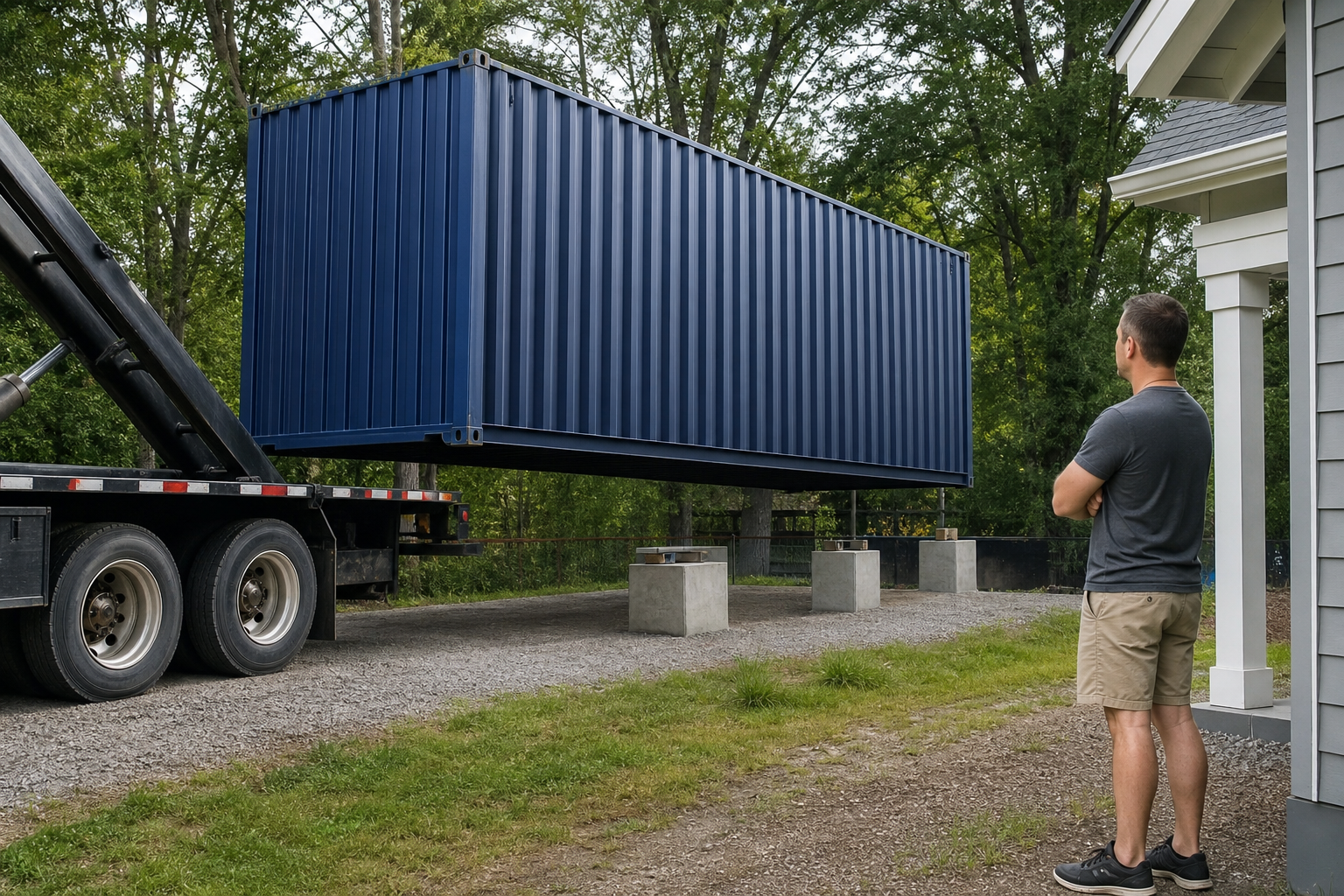
- Use concrete blocks, railroad ties, or a gravel pad for leveling
- Keep the container slightly elevated for drainage and airflow
- Avoid soft mud — trucks and containers sink more easily than people expect
Placement Tips That Save Money
- Mark the exact footprint with spray paint before the truck arrives.
- Leave space to open the cargo doors fully.
- Think about future access for a forklift, pallet jack, or second container.

What to Inspect Before You Pay
Whether you buy online or in a depot yard, a short inspection routine protects your investment.
- Roof: Look for patches, pooling areas, and puncture points.
- Doors: Open and close both doors; check seals and locking rods.
- Floor: Walk the full length; soft spots are a red flag.
- Corners & rails: Corner castings and understructure must be solid for lifting.
- Interior smell: Strong chemical odors may matter for living or office use.
Red Flags
- Daylight visible through walls or roof
- Doors that will not seal or latch
- Major rust at door frames or understructure
- Seller unwilling to share clear recent photos
Frequently Asked Questions
Do I need a foundation?
Not always a full foundation, but you do need a level, stable base. Blocks or a compacted pad are common for storage. Permanent buildings may need engineering and permits.
Can I live in a shipping container?
Yes — many people build container homes and studios. You will typically add insulation, ventilation, electrical, plumbing, and openings. Check local building codes first.
How long do sea containers last?
With basic care, a sound container can last decades on land. Keep doors sealed, manage rust, and maintain good drainage around the base.
Are used containers safe for storage?
Yes, if they are wind and water tight and structurally sound. Inspect floors and seals carefully, especially if you are storing valuable tools or inventory.
Next Steps
Decide size with our 20ft vs 40ft guide, confirm grade in new vs used, then match the unit to a real project using best uses for sea containers. Decide size with our 20ft vs 40ft guide, confirm grade in new vs used, then match the unit to a real project using best uses for sea containers. If you are ready to compare options, start with your use case, preferred size, and delivery location. Then browse available shipping containers for sale and request a quote with photos, grade details, and delivery pricing included.
A good container purchase feels calm and clear: the right size, an honest condition grade, a prepared site, and a delivery plan that fits your property. That is how buyers avoid expensive surprises and get a container that works hard for years.
Really helpful guide. We were about to buy the first cheap container we found online — glad we read the inspection section first. Soft floor would have been a nightmare.
Question: for backyard storage in a rainy area, is used WWT usually enough or should we stretch for one-trip?
The site access checklist saved us. Our driveway looked fine until we measured turning radius for the truck. Ended up going with a 20ft and it fits perfectly.
Clear and practical. Most container sites just push inventory. This actually explains what to ask the seller.
Bought a used 40ft after reading this. Doors sealed well and no leaks through the first wet season. Appreciate the red-flag list.
Does delivery usually include leveling blocks, or do we need to prep that ourselves before the truck arrives?
Great breakdown of grades. One-trip vs WWT finally makes sense. Sharing this with my business partner.
We used your inspection tips at the depot. Found a unit with daylight at a roof patch and walked away. Thank you!